Restaurant Rewards Programs: How to Increase Repeat Orders and Loyalty
Most restaurants already know that keeping a customer is cheaper than finding a new one. What’s less clear is how to actually make that happen in a way that doesn’t require a separate app, a complicated points system, or a discount that eats into margin every time.
The answer isn’t a more complex program. It’s a smarter one — rewards placed at the right moments in the customer lifecycle, connected to the marketing you’re already running, and easy enough that guests actually use them.
Here’s how independent restaurants build loyalty that drives real repeat revenue.
Why Rewards Beat Discounts for Long-Term Growth
The instinct when trying to bring customers back is to offer a deal. A discount gets attention, and it can work — but it trains guests to wait for one. Over time, blanket discounts erode your margin without building any lasting behavior.
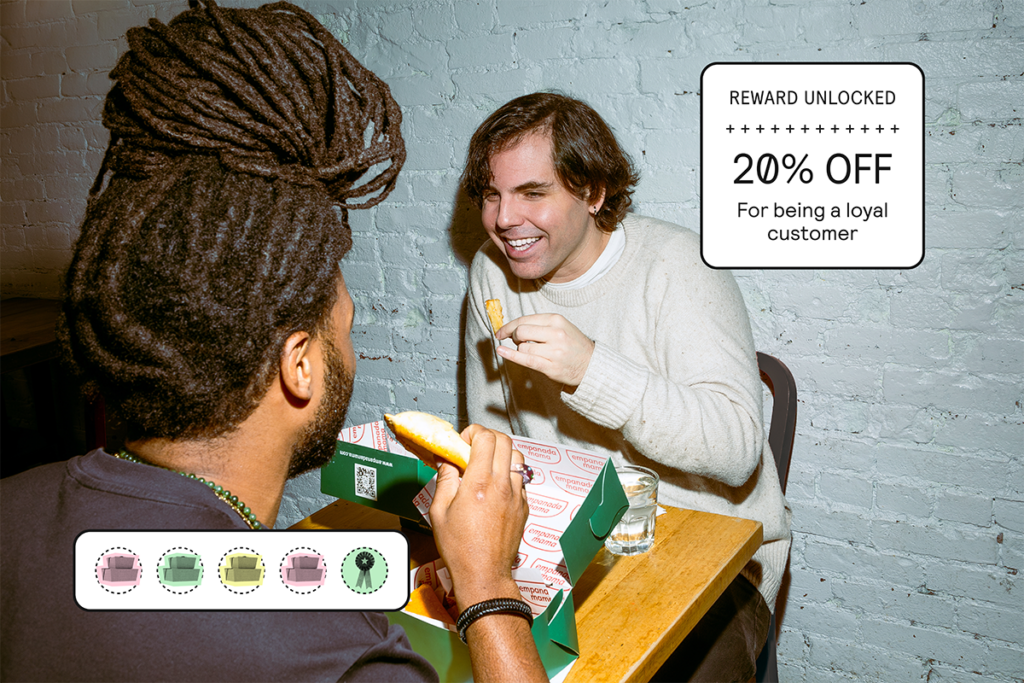
Rewards work differently. Instead of reducing the value of an order, a well-designed rewards program increases the value of the relationship. The guest isn’t coming back because your food is cheaper today — they’re coming back because they’re working toward something, and your restaurant is part of their habit.
The distinction matters for your bottom line. A 10% discount on every third order is a cost with no guarantee of return. A reward triggered after a guest’s fourth visit is a cost you’ve already earned, tied to a behavior you want to reinforce.
The goal of a rewards program isn’t to buy loyalty. It’s to make returning feel like the obvious next move.
Types of Rewards Programs That Work for Restaurants
There’s no single right structure — the best program is the one guests understand immediately and feel motivated to use. Three models work well for independent restaurants:
- Spend-based rewards give guests a credit or reward after reaching a spending threshold — for example, $10 back after spending $100. These work well for restaurants with higher average order values, like catering or dine-in, and they naturally reward your highest-value customers most.
- Visit-based rewards give guests a reward after a set number of visits or orders — the digital version of a punch card. Simple to communicate, easy to understand, and effective for building visit frequency habits.
- Points-based programs assign point values to orders that guests accumulate and redeem over time. More flexible, but also more complex — guests need to understand the redemption math for it to feel motivating.
What Works Best for Independent Restaurants
The common thread in programs that actually drive return visits: simplicity. If a guest has to ask how the program works, it’s already losing them.
For most independent restaurants, a visit-based or spend-based model is the right starting point. Clear trigger, clear reward, no math required. The guest knows they’re one order away from something — and that’s enough to tip the decision when they’re choosing between you and somewhere else.

If you’re looking for more ideas on turning first-time diners into regulars, here’s what works for restaurant customer retention
When to Use Rewards — and When Not To
Rewards are most effective when they’re targeted, not automatic. Applying them to every order reduces their perceived value and increases your cost without proportionally increasing loyalty.
Where rewards drive the most return:
- First-time guests are the highest-leverage moment. A guest who had a great first experience is already halfway to becoming a regular — a reward that pulls them toward a second visit closes the gap. A welcome reward after order one is one of the most reliable ways to convert a trial into a habit.
- Lapsed customers are the second-highest opportunity. A guest who ordered from you three months ago and went quiet already knows your food. A targeted reward — “come back this week, here’s something for you” — is far more effective than a generic promotion to your full list, because the relationship already exists.
Where rewards work against you:
- Applying rewards to every order, regardless of behavior, trains guests to expect them rather than feel earned. It also means you’re spending reward budget on guests who would have come back anyway. Reserve rewards for the moments where they actually change behavior — first visits, lapsed reactivation, and milestone recognition for your most loyal regulars.
Want to see how ChowNow’s Rewards Program works? Book a demo to chat with our experts today.
How Rewards Drive Repeat Behavior
The psychology behind loyalty programs is straightforward: when a guest knows a reward is within reach, the next order feels like progress rather than just a transaction.
This is the habit loop at the core of every effective rewards program:
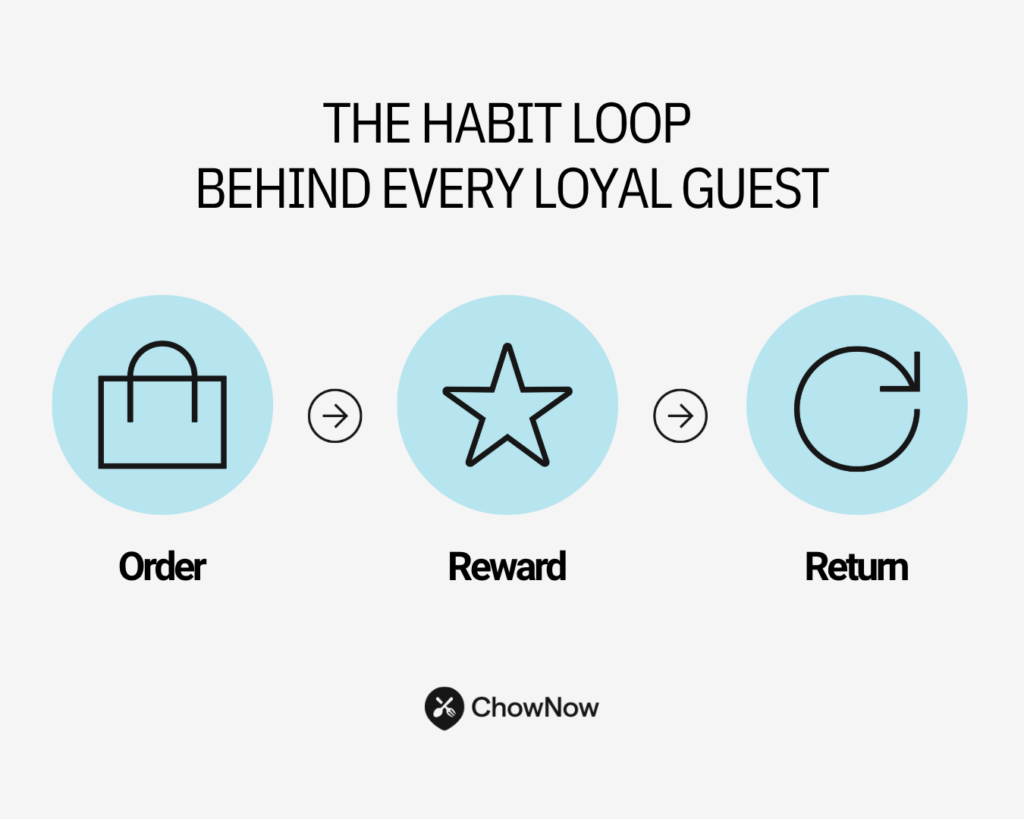
The first order starts the loop. The reward — even if it hasn’t been earned yet — creates anticipation. The return visit closes it. Once a guest has completed that cycle two or three times, returning to your restaurant becomes the default, not a decision.
For independent restaurants, this loop is most powerful when it’s personal. A guest who receives a VIP reward after their tenth order feels recognized. A first-time guest who gets a welcome offer feels valued. Neither of those moments require a complicated program — they just require the right message at the right time, which is where marketing comes in.
How Rewards Work with Email and SMS
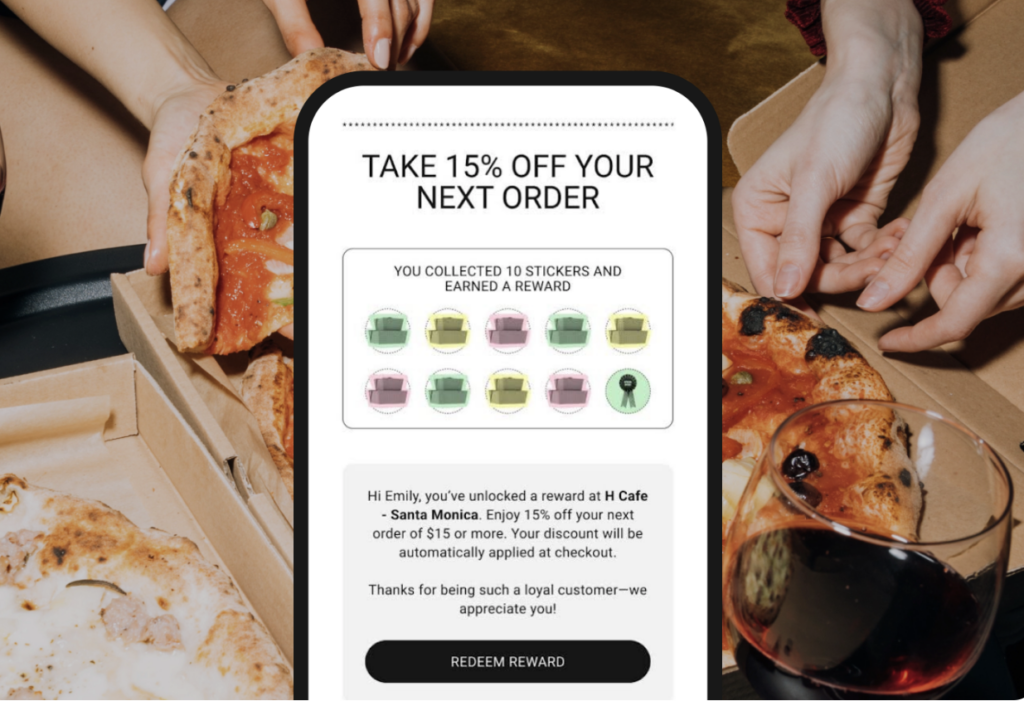
A rewards program on its own drives some return visits. A rewards program connected to your email and SMS marketing drives significantly more — because the reward becomes the reason to reach out, and the reach-out is what actually prompts the action.
Here’s how the three elements work together:
- Email nurtures the relationship. A welcome email after a first order can introduce the rewards program, show progress, and set expectations for what’s coming. A milestone email — “you’re one order away from your reward” — is one of the highest-converting messages a restaurant can send because the guest is already close to acting.
- SMS triggers the immediate action. When a lapsed guest has a reward waiting, a text message is the fastest way to turn that into an order. SMS gets read within minutes, and a message that combines urgency (“your reward expires soon”) with an easy path to order removes every reason to wait.
- Rewards provide the incentive that makes both channels worth opening. Guests who opted in to hear from you will stay engaged longer if messages feel valuable rather than generic. A reward tied to their actual ordering behavior — not a one-size-fits-all blast — is what keeps your marketing feeling personal.
The restaurants seeing the strongest repeat revenue from marketing aren’t running email, SMS, and rewards as three separate things. They’re running them as one connected system: the reward creates the reason, the channel delivers the message, the ordering data makes it personal.
How ChowNow Makes Rewards Simple to Run
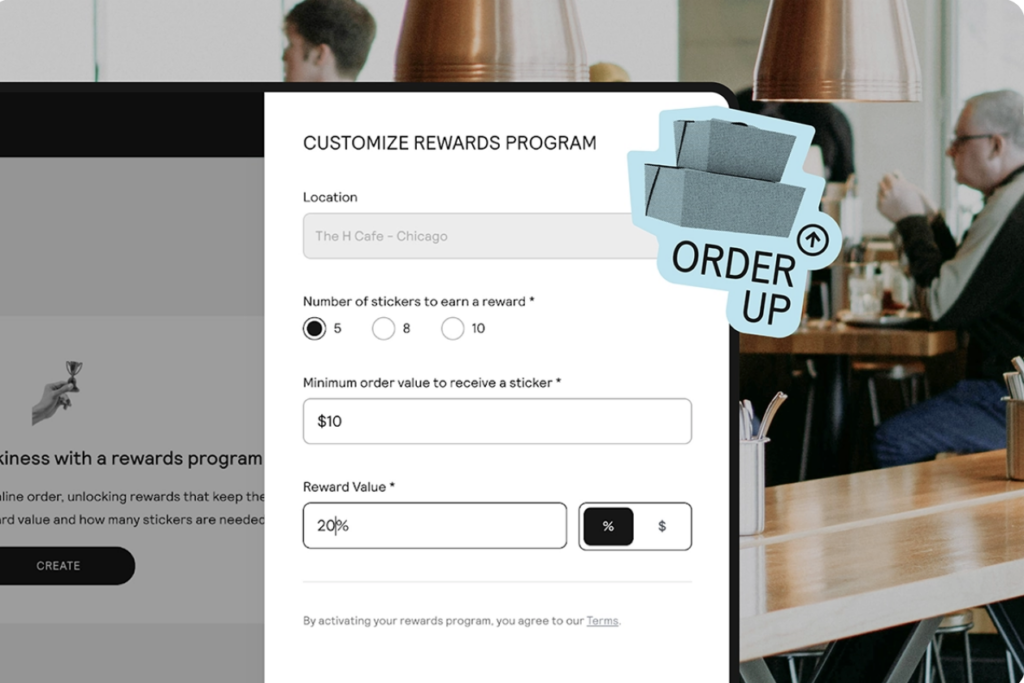
The reason most independent restaurants don’t have a loyalty program isn’t lack of interest — it’s that the tools have historically required a separate system, a separate app, or a level of technical setup that doesn’t fit an already-full operator schedule.
ChowNow’s Rewards Program is built directly into the same platform as your ordering and marketing, which means:
- No separate system to manage. Rewards are connected to your ChowNow ordering data automatically. Guests earn and redeem through the same experience they already use to order — no app download, no separate login.
- Segmentation happens automatically. New, Repeat, VIP, and Lapsed audience segments are generated from real order behavior, so rewards reach the guests they’re designed for without manual list-building.
- Email and SMS campaigns are already connected. When a guest is close to earning a reward or has one waiting, your automated campaigns can trigger the right message at the right time — without any additional setup.
- Reporting ties rewards to real revenue. You can see which rewards are driving return visits and which campaigns are converting, so you’re always investing in what’s working.
The result is a loyalty program that runs in the background, connects to the marketing you’re already doing, and gives guests a clear reason to come back — without adding more to your plate.
Want to learn more about loyalty programs? Check out our breakdown here.
Frequently Asked Questions
Do restaurant rewards programs actually work?
Yes, when they’re simple and well-timed. The most effective programs use rewards at high-leverage moments — after a first order, to reactivate a lapsed guest, or to recognize a loyal regular — rather than applying them to every transaction. Restaurants using marketing automation tied to loyalty data report a 3–5x increase in ROI per campaign compared to generic outreach.
What’s the difference between a loyalty program and a discount?
A discount reduces the price of an order regardless of behavior. A rewards program ties an incentive to a specific action — returning after a first visit, reaching a spending milestone, coming back after going quiet. Rewards build habits; discounts build price expectations. For long-term repeat revenue, rewards are the stronger investment.
How do I get guests to actually sign up for my rewards program?
The easiest path is to connect rewards to your ordering flow so guests are enrolled automatically when they place an order. That removes the sign-up friction entirely. For dine-in guests, QR Code Ordering captures contact information at checkout and can connect them to your rewards program in the same step.
Does a restaurant loyalty program require a separate app?
Not with ChowNow. The Rewards Program is built directly into your existing ordering experience — guests earn and redeem without downloading anything new. For more on how ChowNow’s tools work together, see the full breakdown here.
How do rewards work with email and SMS marketing?
Rewards give your marketing campaigns a reason to exist beyond a generic promotion. A “you’re one order away from your reward” email drives significantly higher conversion than a standard promotional message. An SMS with a reward reminder reaches lapsed guests at exactly the right moment. ChowNow connects rewards, email, and SMS in one platform so campaigns trigger automatically based on real ordering behavior.