How to Get Your Restaurant Found in AI Search
Your customers are starting to skip the search results page entirely. Instead of scrolling ten blue links, they’re asking ChatGPT “where should I order Thai food tonight?” or reading the AI summary at the top of Google before they ever click. If your restaurant isn’t part of the answer these tools generate, you’re invisible at the exact moment someone decides where to eat.
This is the next frontier of restaurant discovery, and the good news is that the work you already do for traditional SEO is what makes you visible here too. Here’s how AI search works for restaurants, and what specifically needs to be true about your website for either kind of search to find you.
How is AI search different from regular Google search?
Traditional search returns a ranked list of links and lets the diner choose. AI search, like ChatGPT, Google’s AI Overviews, Perplexity, and voice assistants, reads across many sources and returns a single, synthesized answer that often names just two or three restaurants. There’s no page two. You’re either in the answer or you’re not.
That raises the stakes. Ranking eighth on Google still gets you some clicks. Being the eighth-best-documented restaurant online gets you left out of the AI’s response entirely.
What makes a restaurant “citable” by AI tools?
AI answer engines pull from the same signals as search, but they lean even harder on structured, consistent, corroborated information. Four things matter most:
- A complete, accurate Google Business Profile. This is still the foundation. AI tools treat your profile as the source of truth for your hours, location, cuisine, and menu. If yours is thin or out of date, you won’t be surfaced. (New to this? Start with our guide on getting the most out of your Google Business Profile.)
- Consistent details everywhere. Your name, address, and phone number should match exactly across your website, Google, Yelp, and every directory. AI models cross-check sources, and conflicting information makes them less likely to cite you confidently. This is core local SEO, and it pays off double in AI search.
- A crawlable menu and clear website copy. AI tools can only recommend what they can read. A fast, well-structured website with your menu, cuisine, and neighborhood described in plain language gives them something to quote. If you’re just getting started, our beginner’s guide to restaurant SEO covers the fundamentals.
- Reviews across trusted platforms. AI answers heavily weight what third parties say about you. A steady flow of recent, positive reviews on Google, Yelp, and other restaurant review sites is one of the strongest signals that you’re worth recommending.
How can a small restaurant actually do this?
You don’t need a technical team. Focus on the highest-leverage moves:
- Keep one source of truth updated. When your hours or menu change, update your Google Business Profile the same day.
- Describe yourself the way diners search. Work natural phrases like “[cuisine] near me” and “[neighborhood] delivery” into your website copy so both Google and AI tools understand what you offer.
- Ask for reviews consistently. A quick follow-up text or a line on the receipt goes a long way.
- Own your website and menu. Content that lives only inside a third-party marketplace app doesn’t help AI tools recommend you, and it hands over your customer relationship and a commission on every order.
Where ChowNow fits in
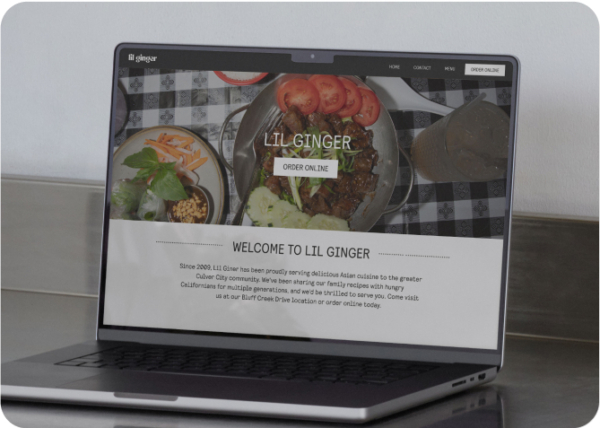
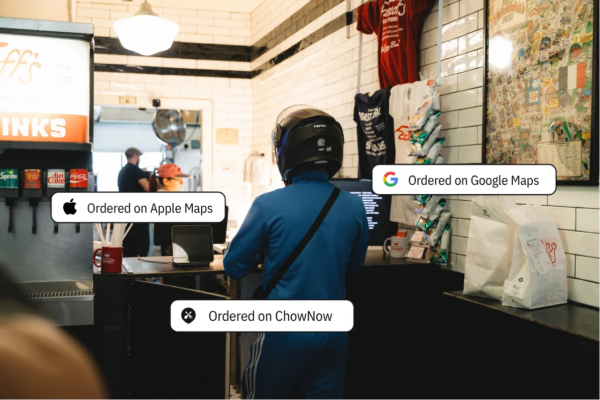
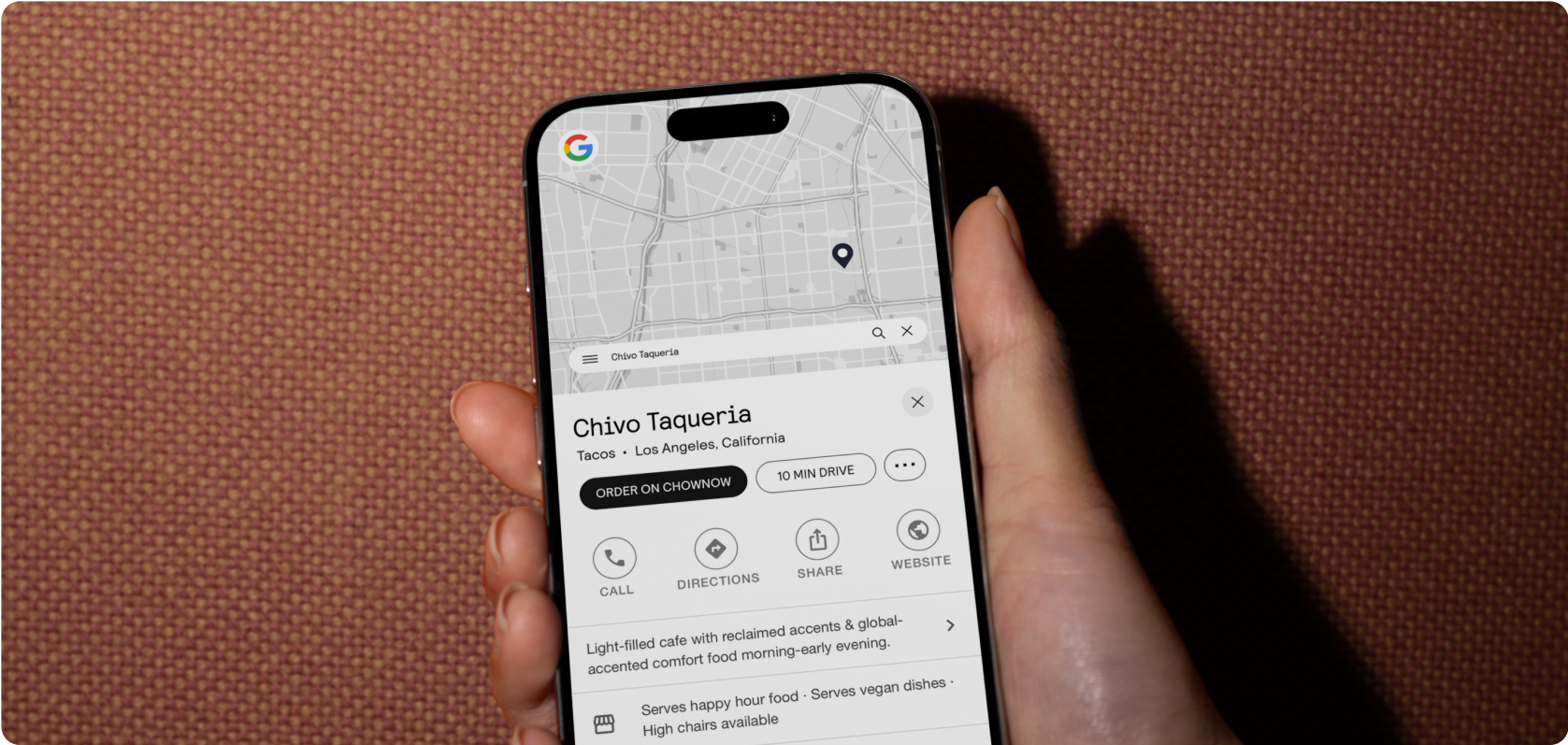
Doing all of this by hand, across every page, while running a kitchen, is a lot. This is exactly what ChowNow’s Website Builder handles for every restaurant partner. ChowNow builds SEO directly into every restaurant website with optimized page titles, meta descriptions, and a clean, crawlable menu structure so your site sends the right signals to Google and AI tools from day one, without you touching a line of code. Plus the ChowNow Discovery Network puts your restaurant, and a direct ordering link, across Google, Yelp, Apple Maps, and more of the places diners (and increasingly, AI tools) look first.
The perk for restaurant owners is straightforward: the same fixes that help a site rank on Google are, without any extra work, the fixes that make a site legible to an AI tool. A title built for search intent is also a summary an AI can quote. Plain-language copy about your cuisine and neighborhood is also the exact phrasing an AI tool needs to describe you accurately. A properly indexed page is also a page an AI tool can find in the first place. It’s the same underlying work, paying off twice.
The payoff: when a customer asks a search engine or an AI assistant where to order, your restaurant is the answer, and the order comes straight to you.
Your best step forward in getting your restaurant found
AI is changing how diners find their next meal, but the playbook is reassuringly familiar: complete your profiles, keep every detail consistent, put your menu on a fast, readable website, and gather real reviews. Get the fundamentals right and you’ll show up wherever your customers are searching, the classic results page, the AI summary, and everything next.
Curious how discoverable your restaurant is right now? Get a free demo of ChowNow and turn searches into direct orders.
FAQs
How can my restaurant get found on Google and Yelp?
Claim and fully complete your Google Business Profile and Yelp listing with accurate hours, address, phone, cuisine, menu link, and recent photos. Keep those details identical everywhere, gather reviews consistently, and make sure your menu lives on a fast, crawlable website, not just inside a third-party app.
How do restaurants show up in Google search for food orders?
Google ranks restaurants by relevance, distance, and prominence. To rank for order-intent searches like “[cuisine] delivery near me,” keep your Google Business Profile active, add a direct ordering link, use location and cuisine keywords in your website copy, and maintain a steady flow of recent reviews.
What’s the best SEO strategy for a small restaurant?
Focus on local SEO. Complete your Google Business Profile, keep your name/address/phone identical across every listing, publish a crawlable menu with cuisine and neighborhood keywords, and collect reviews. It’s low-cost, compounds over time, and doesn’t require an agency.
How do restaurants show up in AI search like ChatGPT and Google AI Overviews?
AI tools synthesize one answer from many sources and usually name just a few restaurants. They favor businesses with a complete Google Business Profile, consistent details across the web, a readable menu and website, and strong third-party reviews, the same fundamentals as traditional SEO, weighted even more heavily.
How do I get my restaurant on Apple Maps for ordering?
Register your business through Apple Business Connect, verify your location, and add hours, photos, and an ordering link. Tools like ChowNow’s Discovery Network can place a direct ordering link across Apple Maps, Google, and Yelp at once.
Does local SEO actually bring in more orders?
Yes. Most restaurant searches carry local intent, like people deciding where to eat right now. Ranking well for those searches captures that demand for free, without paying per-order commissions to a marketplace, and keeps earning long after a paid ad would have stopped.