How to Build a Restaurant Website (Steps, Features, and Cost)
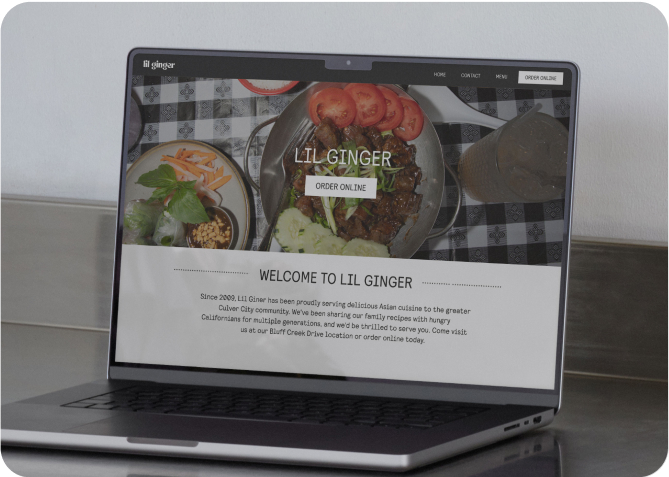
Your website is the one piece of your online presence you fully own. No algorithm deciding who sees your menu, no commission on the orders it brings in. Here is how to build one that actually works for a restaurant: the steps, the features that matter, what it costs, and how to make sure people can find it.
How to Build a Restaurant Website in 5 Steps
- Claim your domain. Keep it short and as close to your restaurant name as possible.
- Choose how you’ll build it. A general-purpose builder, an agency, or a restaurant-specific platform. More on that decision below.
- Design around the menu. Diners come to your site to answer two questions: what do you serve, and how do I get it? Your menu and your order button should be reachable in one click from every page.
- Add direct online ordering. A website without ordering is a brochure. Ordering built into your own site keeps the order, the revenue, and the customer data with you instead of a third-party app.
- Publish your essentials everywhere they need to be. Name, address, phone, and hours should match exactly across your website, Google Business Profile, and anywhere else you’re listed.
What Features Should a Restaurant Website Have?
The non-negotiables:
- A readable, current menu on the page itself, not a PDF
- Direct online ordering so diners can act the moment they’re hungry
- Mobile-first design, since most restaurant searches happen on a phone
- Location, hours, and contact info visible without scrolling or hunting
- Fast load speed, because a hungry diner will not wait for a slow page
- Photos of your actual food, not stock imagery
Nice to have but secondary: reservations, a story or about page, email and SMS signup, and social links.
What Restaurant Website Features Actually Help With Local Search?
Local SEO for restaurants comes down to making your restaurant easy for machines to read and consistent everywhere it appears:
- Structured menu and business data. Search engines reward pages where your name, cuisine, address, hours, and menu items exist as readable text, not images.
- Consistent NAP (name, address, phone) across your site and every listing.
- A connected Google Business Profile that links to your site and your direct ordering.
- Location-relevant page copy, like your neighborhood and cuisine in page titles and headings.
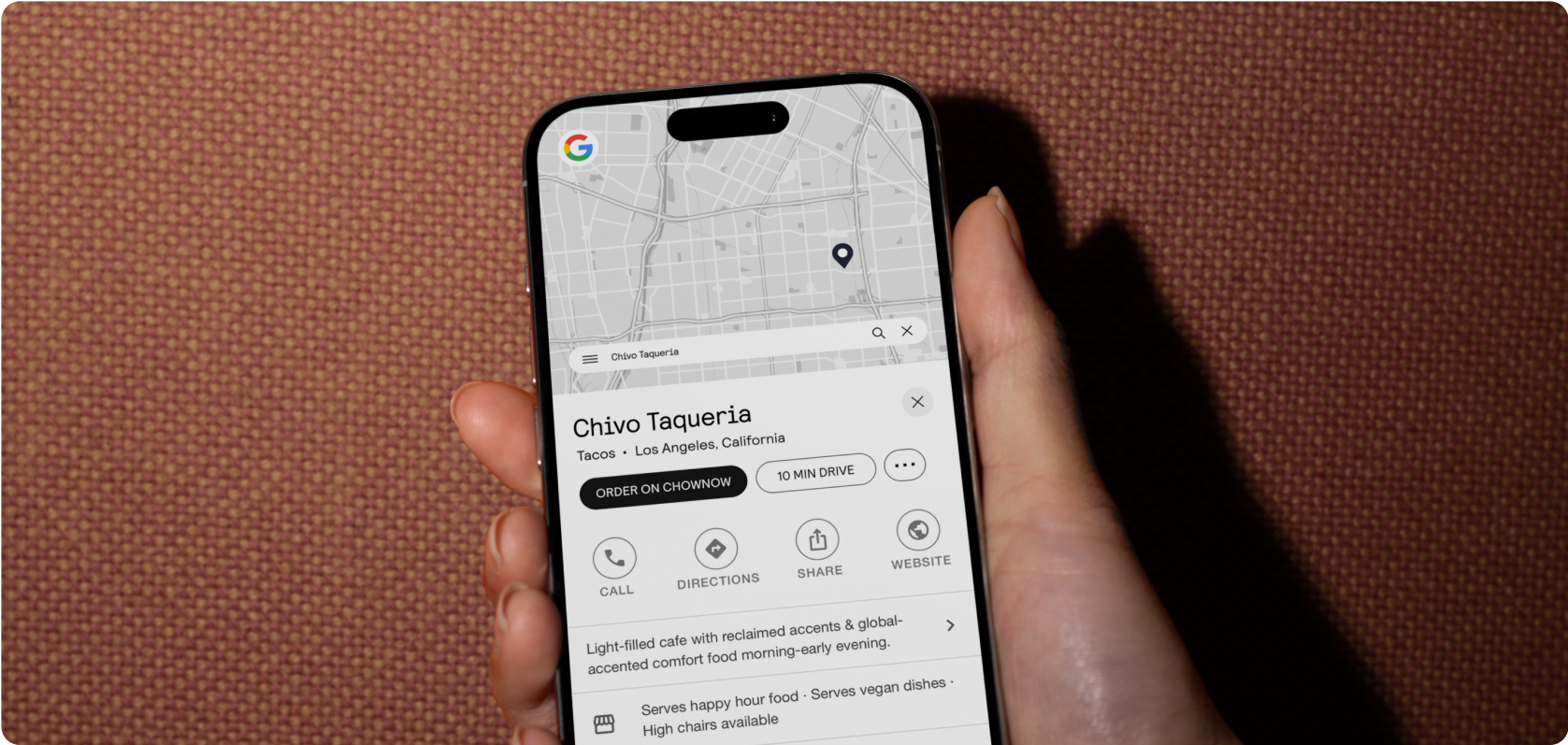
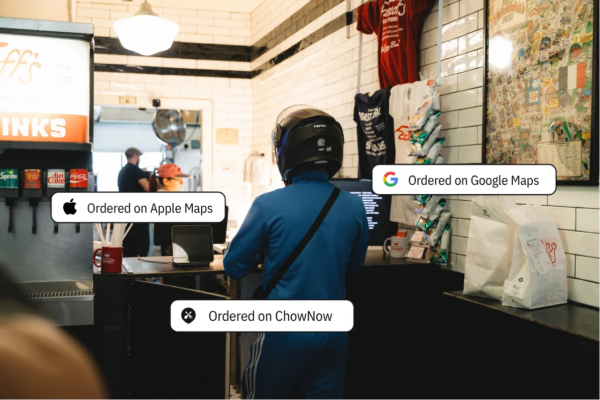
This is also where being on ChowNow does extra work beyond the website itself. Search engines and AI tools like Google, ChatGPT, Perplexity, and Bing can now read a restaurant’s name, cuisine, address, hours, service options, and full menu directly from its ChowNow Marketplace listing page. That improves how restaurants show up in search and AI-powered results over time, and it required no action from restaurant partners. Your website and your listings work as one system, and ChowNow’s Discovery Network extends the same direct-ordering presence across Google, Yelp, Apple Maps, and more.
How Much Does It Cost to Build a Restaurant Website?
Rough 2026 numbers:
- General-purpose builders like Squarespace run $16 to $99 per month billed annually, with online ordering requiring a third-party integration on top.
- Web design agencies typically charge $2,500 to $3,500 for a standard build, and more for custom work, plus ongoing hosting and updates.
- ChowNow’s Website Builder is included in every ChowNow plan, Launch, Grow, and Elevate, with direct online ordering built in rather than bolted on. Full details are on the pricing page.
The real cost question isn’t the website; it’s the ordering. A site that routes orders through a commissioned channel costs you on every transaction. A site with commission-free direct ordering pays for itself.
Should You Use Squarespace, an Agency, or a Restaurant Website Builder?
All three can produce a good-looking site. The difference is what happens after launch.
General builders like Squarespace are flexible and well-designed, but restaurants have specific jobs: menus that update in real time, ordering that flows to the kitchen, and customer data that feeds your marketing. On a general platform, each of those is an integration you assemble and maintain. An agency solves design but usually hands those same operational questions back to you.
A restaurant-specific platform builds those jobs in. With ChowNow, the website, direct online ordering, and your email and SMS marketing run on one system, so every order builds a customer list you own.
Deciding between platforms? Our guide to the best restaurant website builders compares the options side by side.
FAQ
How much does a restaurant website with online ordering cost?
It depends on how the ordering is added. On a general builder, you pay the platform fee plus a third-party ordering integration, which often carries its own monthly cost or per-order fees. With ChowNow, the website and commission-free direct online ordering are included together in every plan, so there’s no separate ordering cost stacked on top.
Can I add online ordering to my existing restaurant website?
Yes. If you already have a site you like, you don’t need to rebuild it. ChowNow’s direct online ordering can be added to an existing website, so diners order from your site and the order, revenue, and customer data stay with you.
Do restaurant websites need to be mobile-friendly?
Yes, and it’s the single most important design requirement. Most restaurant searches happen on a phone, usually right before a diner decides where to order. If your menu or order button doesn’t work well on mobile, you lose the order at the exact moment of intent.
What is the best platform to build a restaurant website?
The best platform is the one that handles restaurant-specific jobs natively: a menu that updates in real time, ordering that flows to your kitchen, and customer data that feeds your marketing. General builders can look great but treat those as add-ons. Restaurant-specific platforms like ChowNow build them in.
How long does it take to build a restaurant website?
On a restaurant-specific platform, days to a couple of weeks, since menus and ordering are pre-built. DIY on a general builder typically takes a few weeks of your own time. Agency builds usually run four to eight weeks depending on scope.