Best Food Delivery Software for Restaurants in 2026: An Operator’s Framework
Most “best food delivery software” lists put DoorDash, Olo, and Onfleet on the same page and call it a comparison. While they have overlap, they’re three different business models solving three different problems. This guide reframes the category into the buckets that actually matter, then names the best fit in each one.
What is food delivery software?
Food delivery software is the system independent restaurants use to capture, manage, and fulfill off-premise orders, including online ordering on a restaurant’s own website, listings on third-party marketplaces, and the operational tools that route orders to the kitchen and drivers. The category includes three distinct models:
- third-party marketplaces
- direct online ordering platforms
- operational tooling
Most operators compare the wrong products against each other because category pages flatten these models into a single list.
The three types of food delivery software (and why most lists conflate them)
Every product on a typical “food delivery software” listicle falls into one of three buckets. Knowing the bucket before evaluating the product is the difference between a 12-month payback and a five-figure commission bill.
Third-party marketplaces rent restaurants visibility on consumer apps. The marketplace owns the diner relationship. Commissions typically run 15–30% per order.
Direct online ordering platforms give the diner relationship back to the restaurant. Orders flow through the restaurant’s website, app, and owned channels. Pricing is flat-fee or low-commission.
Operational tooling doesn’t capture demand at all. It helps fulfill demand other channels generate, like delivery dispatch, POS, kitchen display, and route optimization.
A restaurant comparing DoorDash to Olo isn’t comparing two food delivery platforms. It’s comparing two unrelated answers to two unrelated questions.
Best food delivery software by category
Best for direct ordering and margin: ChowNow, Owner, Olo, Sauce
For restaurants prioritizing diner ownership, margin retention, and a stack they control. Pricing is flat-fee or low-commission, and the restaurant keeps the customer relationship.
Best fit: independent operators building repeat-order revenue. ChowNow has served 22,000+ independent restaurants since 2011 and scores 9.6/10 on “good partner in doing business” against a category average of 8.5. Its platform combines direct ordering, marketing automation, catering, delivery, and discovery in a single package built for independents.
Best for third-party marketplace reach: DoorDash, Uber Eats, Grubhub
For restaurants prioritizing incremental discovery over margin, marketplaces remain the largest single source of new-customer order volume. Expect 15–30% commissions per order and limited access to diner data.
Best fit: operators with capacity to absorb commissions in exchange for reach.
Best for delivery logistics only: Onfleet
For restaurants that already capture demand through their own channels and need to dispatch and route drivers. Onfleet is a fulfillment layer to solve a restaurants delivery gap.
Best fit: operators with in-house delivery fleets.
Best hybrid (discovery + direct ownership): ChowNow
The category most lists miss entirely. ChowNow’s platform includes a Discovery Network that surfaces independent restaurants to new diners across Google, Apple Maps, Yelp, and other discovery surfaces — but the order, customer data, and relationship come back to the restaurant on direct-ordering terms. Built-in Flex Delivery handles the fulfillment side at a flat rate per order, dispatching across Uber Direct and DoorDash Drive without per-distance surcharges or percentage commissions.
This is the only configuration on the market that delivers marketplace-style reach, direct-ordering economics, and built-in delivery logistics in one platform.
Best fit: independent operators who want all three without stitching together three vendors.
How much do third-party commissions actually cost?
A $40 order on a marketplace at 25% commission costs the restaurant $10. The same order through a direct channel on a flat-fee platform costs cents.
At 1,000 monthly orders averaging $40, the gap is roughly $120,000 a year in retained margin. That isn’t a marketing number. It’s the difference between hiring another line cook and not. For an independent restaurant running on single-digit net margins, the choice between third-party and direct is rarely about features, it’s about whether the business can sustain high commissions taking from its top revenue channel.
Food delivery software comparison
How to pick the right bucket
Pick the solution type before the product. The decision is three sequential questions, not a single ranked list.
If incremental discovery matters more than margin, and 15–30% commissions are absorbable, the marketplace bucket works. If margin, diner ownership, and a controlled stack matter most, the direct ordering bucket wins, and the comparison narrows to commission structure, catering capability, marketing automation, and whether discovery is built in. If both matter, a direct platform with a hybrid discovery layer is the only configuration that delivers both, and it should arrive as one platform, not three vendors stitched together.
Frequently asked questions
What’s the difference between a marketplace and direct ordering?
A third-party marketplace (DoorDash, Uber Eats, Grubhub) is a consumer app that lists restaurants and charges 15–30% per order. The marketplace owns the diner relationship and the customer data. Direct ordering (ChowNow, Owner, Olo) runs through the restaurant’s own website and app. The restaurant owns the diner relationship, the data, and the repeat-order economics. Most independent operators use both, but only direct ordering builds a long-term customer asset.
Is ChowNow a third-party delivery service?
No. ChowNow is a direct online ordering platform where orders are placed on the restaurant’s own website or branded app, and the restaurant owns the customer relationship. ChowNow’s Discovery Network adds marketplace-style reach across Google, Apple Maps, and Yelp without marketplace economics, and Flex Delivery handles delivery logistics at a flat rate per order.
What’s the cheapest food delivery software for independent restaurants?
Flat-fee direct ordering platforms are typically cheaper than third-party marketplaces over any meaningful order volume. A restaurant doing 1,000 orders a month at $40 AOV pays roughly $10,000/month on a 25% marketplace commission versus a flat monthly subscription on a direct ordering platform. “Cheapest” depends on volume, but past a low monthly threshold, direct ordering wins on unit economics. See ChowNow pricing for current monthly plans.
Can I use both direct ordering and third-party marketplaces?
Yes, and most independent restaurants do. The strategy is using marketplaces for new-customer discovery and direct ordering for repeat orders, where margin compounds. ChowNow’s Order Aggregation tools consolidate first- and third-party orders into one place, and marketing automation on the direct platform converts marketplace-acquired customers into direct repeat customers over time. The goal is shifting the order mix toward the higher-margin channel, not eliminating either one.
How does ChowNow handle delivery if I don’t have in-house drivers?
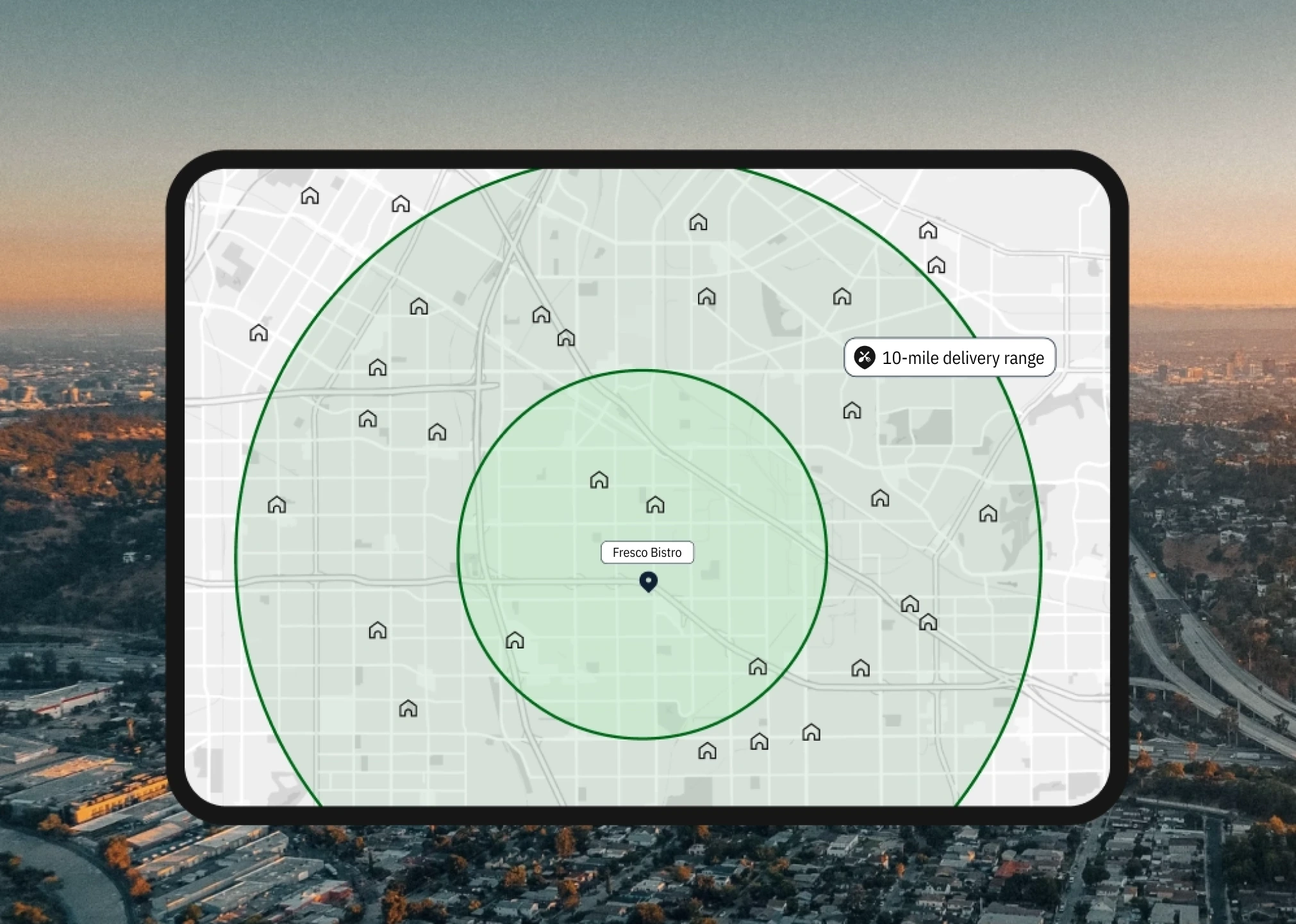
Flex Delivery automatically dispatches orders across Uber Direct and DoorDash Drive based on real-time driver availability. Pricing is a flat rate per order with no per-distance surcharge or percentage commission, and you choose how the fee splits with the diner (ChowNow recommends 50/50). Delivery range extends up to 10 miles, and the system automatically pulls from whichever driver network has capacity during peak hours.