Marketing Strategies For New Restaurants: How To Get Discovered And Build Momentum

When you first started planning your restaurant, learning how to do marketing was probably the furthest thing from your mind. But as opening day looms closer, the reality sets in: you need people through the door, and you need it to happen quickly.
If you’ve never done restaurant marketing before, it can feel intimidating. There’s no clear starting point, no finish line, and very little guidance on what actually matters early on versus what can wait.
In this article, we break down exactly what to focus on during your first 90 days open—the actions that help people find you, choose you, and come back—without wasting time or money on things that won’t help your new business.
Marketing your restaurant doesn’t have to be complicated. It just needs to be focused.
Key Takeaways
- A strong marketing strategy for new restaurants focuses first on visibility, then trust, then repeat business
- Local SEO, an optimized Google Business Profile, and clear online visibility help hungry customers find you fast
- Early positive reviews, a strong online ordering experience, and loyalty programs turn first visits into repeat visits
- Simple, consistent social media marketing supports discovery, reviews, and customer engagement
- A focused 30 / 60 / 90-day restaurant marketing plan prevents burnout and helps your marketing campaigns compound over time
Get Discovered Locally As Fast As Possible
Early on, your biggest marketing problem isn’t persuasion—it’s visibility. If people in your local area don’t know your restaurant exists, nothing else matters.
The fastest wins come from making sure you show up where people already look when they’re deciding where to eat.
Here’s how to get visibility fast.
Set Up and Optimize Your Google Business Profile
The fastest way to show up in local search and Google Maps is with a complete, well-optimized Google Business Profile. This is often the first impression for a new restaurant, and it needs to do a lot of heavy lifting for you.
Make sure your profile includes:
- Your full name, address, and phone number (NAP), consistent across the web
- Your online menu with a direct link to order (not just through third-party food delivery apps)
- Your hours, location info, and high-quality photos of your space and menu items
- A short but compelling restaurant description using relevant keywords like cuisine, neighborhood, or signature dishes
Done right, this is one of the lowest-cost marketing efforts you can make, and it drives real foot traffic and orders without ongoing expenses.
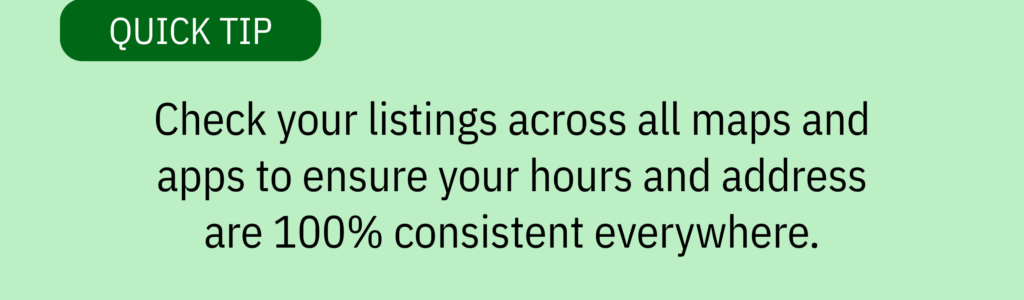
Lock Down Consistent Listings Across All Online Directories
Beyond Google, your restaurant appears across dozens of platforms tied to local SEO—from maps to review sites to directory apps that pull business data automatically.
Inconsistent listings create confusion and doubt. Wrong hours, old addresses, or mismatched names can cost you potential customers before they ever see your food.
For local businesses, consistency matters more than perfection.
Make sure your name, address, phone number, and hours are the same everywhere. This improves online visibility, supports local restaurant marketing, and prevents guests from showing up when you’re closed or thinking you’ve shut down entirely.
This step isn’t glamorous like social media, but it’s foundational. It helps search engines trust your business and helps customers trust you.
Make It Easy to View Your Menu and Order Directly

Once someone finds you, make it ridiculously easy for them to order your food. That means having a mobile-friendly online menu and a clear path to order from your direct online ordering system—not just through third-party apps that charge high delivery costs.
Here’s what helps:
- Prominent “Order Now” buttons on your Google Business Profile, restaurant website, and social pages
- A simple, branded online ordering experience
- Menu descriptions that are clear, craveable, and up to date
- Professional, appetizing photos of your most popular menu items
This is where many restaurant owners miss out. If guests can’t figure out how to get your food, they’ll move on, and your early marketing campaigns won’t convert.
Turn Early Attention Into Trust And Repeat Business

Attracting new customers to visit once is only half the battle. Once you’ve got people walking in the door, it’s time to focus on building credibility and connection. That’s how you move from “new spot in town” to “go-to neighborhood favorite.”
Get Your First Reviews Fast and Ethically
Positive reviews will always be important to your restaurant business, but that goes double for the first 90 days you’re open. They influence where you show up in the search engine, how credible you look compared to nearby local businesses, and whether potential customers feel confident choosing you.
With 68% of diners saying they’d try a new restaurant based on positive reviews, this a great way to get your local community through the doors.
Here’s how to encourage reviews the right way:
- Personally ask happy guests to leave a review—especially in your first few weeks
- Print a short review request on your receipts or order confirmations
- Follow up via email using a polite, non-pushy tone
- Never incentivize positive reviews; Google and directories will penalize you by limiting visibility
You don’t need hundreds of reviews—just a steady stream of authentic diner experiences that build trust.
Start Direct Online Ordering and a Loyalty Program From Day One
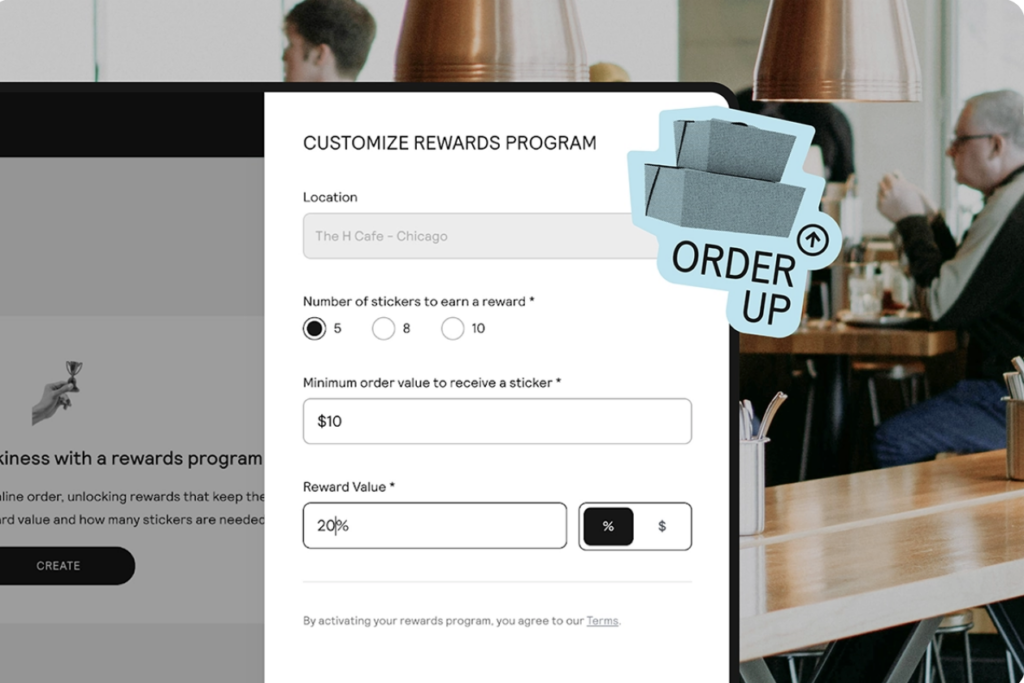
It costs way less to keep a guest coming back than to attract a new one. The best way to drive repeat visits is to put a simple loyalty program in place from day one, especially if you’re using direct online ordering.
Your reward system doesn’t need to be complicated to be effective. Something as simple as tracking how many times a diner places an order, and when they hit the required number of visits, they automatically get sent a discount on their next order.
This is one of the most effective ways to drive repeat business without increasing your customer acquisition cost.
The key is ownership. When guests order directly, you control the relationship, not a third party.
Capture Guest Info Early So You Can Market Outside of Social Media
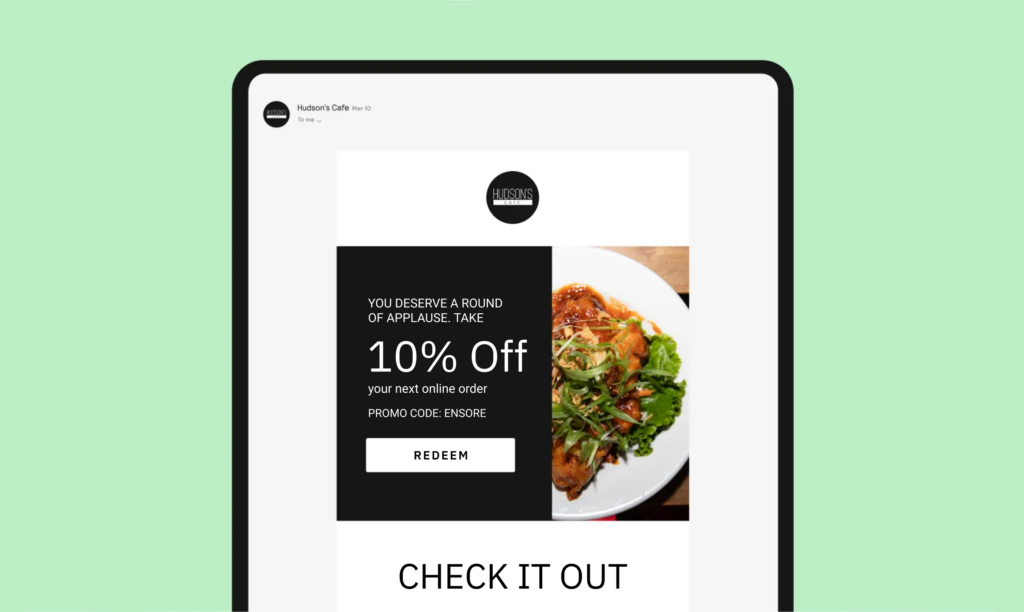
Relying only on social media means you’re always one algorithm change away from losing visibility. Capturing guest contact information early gives you a more reliable way to stay connected.
Email marketing allows you to send updates, share promos, and remind guests you exist, without paying for ads every time.
Over time, this becomes one of your most valuable restaurant marketing tools for driving repeat customers.
Owning your audience helps you build a real customer base, not just one-time orders.
Build A Simple Social Media Plan You Can Maintain
Social media marketing can absolutely help your restaurant, but not if it eats up all your time or becomes a stress point.
The key is to build a plan you can actually keep up with—one that creates visibility without taking you off the line or away from your team.
Choose the Platforms That Match Local Discovery
Not every platform is right for every restaurant. Your goal is to show up where potential customers in your area are already spending time—not to go viral nationwide.
Here’s where to start:
- Instagram: great for visuals, user-generated content, and stories
- Facebook: powerful for local events, updates, and direct messaging
- TikTok: worth testing if your team enjoys it and you’re targeting younger diners
- Google: not a “social” platform, but treat your Google Business Profile updates like mini-social media posts
Don’t overcommit. Choose one or two platforms you can use consistently and well.
Start With a Simple, Repeatable Content Cadence
View this post on Instagram
You don’t need to reinvent the wheel every week. In fact, the best restaurant marketing strategies focus on repetition and rhythm over raw creativity.
Here’s an easy starter cadence:
- 1 photo or video post per week showing off your space or food
- 1 behind-the-scenes or staff-focused post to build connection
- 1 guest-focused post, like a positive review or user-generated content
Batch your content if you can—schedule it weekly or monthly, so you’re not stuck posting on the fly.
Connect Content to Real Marketing Outcomes
Your social media posts should always have a purpose. Use it to point people back to the actions that matter: viewing your menu, leaving reviews, ordering directly, or signing up for updates.
Leverage user-generated content by resharing guest posts and tagging customers when appropriate. This helps engage customers, builds trust, and increases social media engagement without extra work.
Over time, this approach helps encourage repeat visits and keeps your restaurant visible within the local community.
Social media works best when it supports the rest of your restaurant marketing strategies, not when it tries to replace them.
Plan Your Launch And First 90 Days Of Marketing
The biggest mistake new operators make is trying to do everything at once. A strong restaurant marketing plan is about sequencing—knowing what deserves attention now versus what can wait.
When you focus on the right actions at the right time, your marketing efforts build on each other instead of competing for your time.
Pre-Opening: Focus on Discovery and Anticipation
Before you unlock the doors, your marketing efforts should be about one thing: building excitement and helping nearby diners know you exist.
Key actions before opening:
- Set up and optimize your Google Business Profile
- Claim your social handles and start posting teaser content
- Make sure your online menu and online ordering system are ready
- Announce your opening date and collect emails via a simple landing page
- Partner with other local businesses or food influencers to create buzz
The goal is to show up online before you ever serve your first guest.
Opening Week: Avoid the “Try Everything” Trap
It’s tempting to layer on Google Ads, influencer posts, giveaways, and traditional advertising all at the same time.
The problem is that spreading across too many marketing channels usually increases customer acquisition cost without improving results.
Instead, pick a few effective marketing strategies you can execute well. Local discovery, reviews, and follow-up marketing will drive more new customers and repeat visits than a dozen half-managed campaigns.
More activity doesn’t equal better results—better focus does.
Use a Timeline-Based Marketing Plan to Stay On Track

A timeline-based marketing plan keeps you focused on what actually compounds.
Early visibility leads to reviews.
Reviews support trust.
Trust supports repeat business.
Over time, those pieces lower your reliance on paid promotion and help you boost sales more sustainably.
By mapping actions across your first 30, 60, and 90 days, you create a clear path forward—one that supports growth without overwhelming your team or distracting you from running the restaurant.
First 30 / 60 / 90 Days Restaurant Marketing Plan
Your restaurant marketing success depends on consistent, compounding actions—not splashy campaigns.
Use this 90-day window to build sustainable habits and systems.
Need Help Planning Your Restaurant’s Marketing for the Rest of the Year?
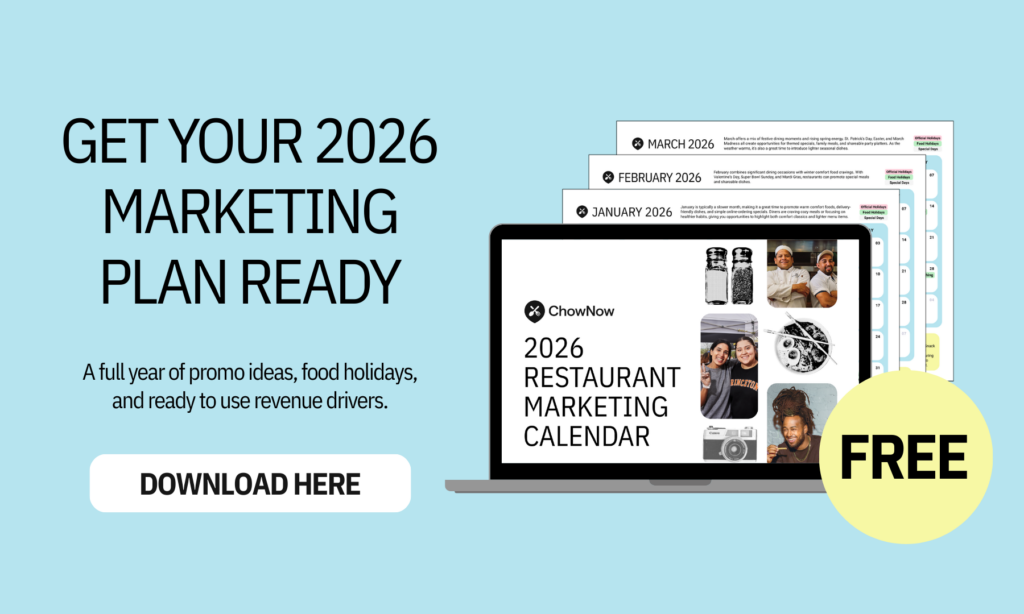
Download ChowNow’s 2026 Restaurant Marketing Calendar to get a clear, month-by-month view of what to promote, when to promote it, and how to plan your marketing ahead of time. It’s designed to help restaurant operators stay consistent, avoid last-minute scrambling, and build marketing momentum throughout the year.
Marketing Strategies for New Restaurants Frequently Asked Questions
What’s the best marketing strategy for a new restaurant?
The best approach is one that prioritizes local visibility first, then builds trust, and finally drives repeat business. Early restaurant marketing should focus on showing up in local search, making your menu easy to find, and collecting reviews from real guests. Once those basics are in place, follow-up channels like email marketing, sms marketing, and loyalty programs help turn first-time diners into regulars without increasing customer acquisition cost.
How do I market a restaurant that’s about to open?
Before opening, focus on discovery and anticipation. Make sure your Google Business Profile is live and accurate, your online menu is visible, and your online ordering system is ready to accept orders. Posting teaser content on social media, collecting emails, and partnering with nearby local businesses or food influencers helps ensure people know your restaurant exists before day one.
What should a new restaurant focus on first for marketing?
New restaurants should focus first on local restaurant marketing fundamentals. That includes accurate listings, strong online visibility, clear menu access, and early positive reviews. These actions help attract customers who are already searching and make it easier for them to choose you. Advanced marketing campaigns and paid ads can come later, once the basics are working.
How long does it take for restaurant marketing to work?
Some results happen quickly, while others compound over time. Local visibility and reviews can start driving new customers within weeks. Building a loyal customer base through email marketing, loyalty programs, and repeat visits typically takes a few months. The key is consistency — steady marketing efforts performed in the right order outperform short-term promotions.
What does a realistic new restaurant marketing plan look like for the first 90 days?
A realistic restaurant marketing plan is timeline-based. The first 30 days focus on visibility, listings, and early reviews. Days 31–60 prioritize retention and simple rewards. Days 61–90 focus on refining what works, encouraging repeat visits, and strengthening your restaurant brand. This approach helps you build momentum without overwhelming your team or relying heavily on paid advertising.