How Independent Restaurants Can Reduce Operational Drag

Nobody opens a restaurant to reconcile invoices at midnight. But there you are: doors locked, kitchen dark, updating one menu price in four places and drafting an email about a distributor charge that looks wrong. None of it is cooking. None of it is hospitality. All of it is operational drag.
Drag is rarely one big problem. It’s a dozen small frictions that add up to lost hours and leaked margin, and it hits both sides of your business: what you spend and what you earn. ChowNow and Buyers Edge Platform each help simplify one side of that equation. Here’s where drag hides, why the two sides feed each other, and a simple framework for cutting it.
What Operational Drag Is
Operational drag is the accumulated cost of manual work, disconnected tools, and hidden leakage that pulls a restaurant owner away from running the restaurant. It’s the time spent reconciling invoices by hand, the margin lost to fees you can’t see, and the mental load of juggling systems that don’t talk to each other.
Why Independent Restaurants Feel Operational Drag More Than Large Chains
Large chains have departments for this. A purchasing team negotiates distributor contracts. A finance team audits invoices. A marketing team runs campaigns. An operations team standardizes workflows.
At an independent restaurant, all of those departments are one person: the owner. There’s no back office to absorb the friction, so every inefficiency lands directly on your time or margin. A pricing discrepancy a chain’s finance team would catch in a weekly audit sits unnoticed in your invoice stack. A menu update a chain pushes through one system, you retype into five.
That’s why drag isn’t just an annoyance for independents. It’s a structural disadvantage, unless you close the gap with the same kind of leverage chains have: consolidated purchasing power and technology.
Signs Operational Drag Is Costing Your Restaurant More Than You Think

You don’t need a consultant to diagnose drag. If several of these sound familiar, it’s already costing you:
- You reconcile invoices and track food costs in spreadsheets by hand
- You can’t say with confidence whether the price you pay for a core ingredient is competitive
- Your counter has more than one tablet on it, each with its own orders and login
- A single menu change means updating your website, your ordering platforms, and your third-party listings separately
- You know commission fees are eating into delivery margin, but you have never totaled the annual number
- Your regulars order through third-party apps, so you have no way to contact them
- Marketing happens when you have a spare hour, which means it rarely happens
Each item looks small on its own. Together, they are the reason the work never ends.
Drag on the Buy Side
Everything your restaurant purchases carries hidden friction. Most independents buy from multiple distributors, each with its own pricing, invoices, and relationship to manage. Without visibility across it all, you can’t tell whether you are paying a fair price, whether contracted pricing is being honored, or where costs are creeping.
Then there’s the manual work. Food costing, recipe costing, and inventory are still pen-and-paper or spreadsheet exercises at most independent restaurants. That’s slow, error-prone, and usually happens after margins have already taken the hit.
This is the problem Buyers Edge Platform was built to solve. Its digital procurement network represents more than $100 billion in transactions across 324,000+ operator locations, and it puts that collective buying power to work for independents through Dining Alliance, its group purchasing organization for independent restaurants. Members access negotiated contract pricing and rebates on items they already buy, without changing products, distributors, or processes. On the visibility side, Buyers Edge Platform software tracks spend, verifies pricing, and manages food costs automatically, so you catch leakage before it compounds instead of discovering it at month end.
Drag on the Sell Side
The sell side has its own version of the same problem: fragmentation. Orders come in through your website, phone, and multiple third-party apps, each on its own tablet with separate reporting. Every menu change has to be made in every place. Commission fees erode margins on each third-party order, and because typical independent margins are thin, a 15 to 30 percent commission can exceed what you make on the meal itself.
The silent cost is data. When orders flow through third-party marketplaces, the diner relationship belongs to the marketplace. You can’t email your own regulars, reward your best customers, or turn a first-time diner into a repeat one.
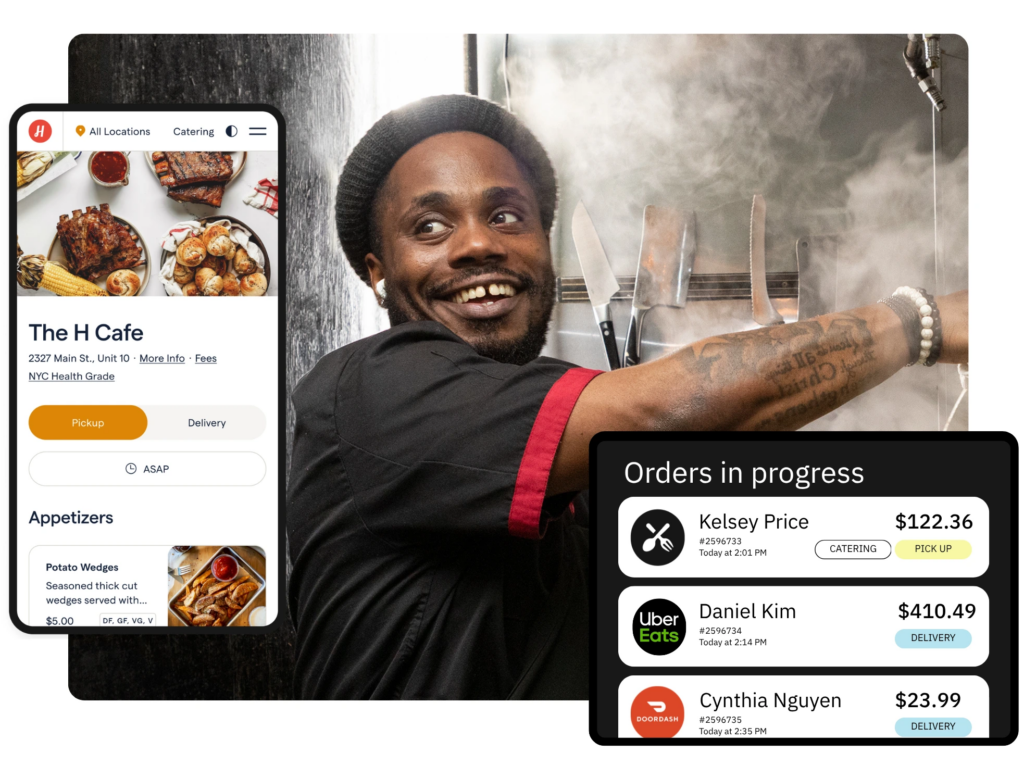
ChowNow offers a unified platform, trusted by 20,000+ independent restaurants, that consolidates the sell side. Direct online ordering through your website and branded app is commission-free, and ChowNow restaurants save an average of $16,000 a year in commission fees. Order aggregation pulls third-party orders into one place alongside your direct channel, ending tablet sprawl. Centralized menu management means you update once and it syncs everywhere. And because you own your diner data, built-in email and SMS marketing runs automatically, turning ordering behavior into repeat visits. The Discovery Network extends your reach across 9+ high-traffic channels like Google, Yelp, and Apple Maps, so new diners find you and order directly from your restaurant.
Why the Two Sides Compound Each Other
Buy-side drag and sell-side drag aren’t separate problems. They feed each other, because they draw from the same limited resource: your time.
Every hour spent reconciling invoices is an hour not spent on marketing. Every night lost to tablet chaos is a night you don’t review your food costs. Margin leaked to commissions on one side and unverified pricing on the other comes out of the same bank account, and it shrinks the cushion you would use to fix either problem.
Small Inefficiencies Add Up Faster Than Most Operators Realize
Consider a plausible week. Thirty minutes a day retyping third-party orders or juggling tablets. Two hours a week updating menus across platforms. Three hours a month chasing invoice discrepancies. An hour a week of marketing that never happens because something else caught fire. None of those numbers sounds alarming alone. Stacked across a year, they represent hundreds of hours of owner time, on top of the margin quietly leaking through commissions and unverified pricing the whole while.
That’s the compounding nature of drag: the frictions are individually tolerable, which is exactly why they survive.
A Simple Way to Audit Your Own Drag
You don’t need to fix everything at once. Walk through your operation with three questions.
Consolidate
Where are you running multiple tools, tablets, distributors, or logins that could be one? Fragmentation is the root of most drag. Consolidating purchasing through a group purchasing organization and consolidating ordering channels into a single platform each remove a whole category of friction at once.
Automate
What do you still do by hand that a system could do for you? Food costing, invoice auditing, menu syncing, and diner marketing are all automatable today. If a task is repetitive and rule-based, your time is too valuable for it.
Increase Visibility
Can you see your actual costs and your full revenue picture? If you can’t answer “am I paying a fair price for chicken?” or “what did commissions cost me last quarter?” in a few minutes, you are managing blind. Visibility is what turns drag from something you feel into something you can fix.
Get Started
Drag is beatable, one side at a time.
On the buy side, join Dining Alliance for free and put Buyers Edge Platform’s purchasing power behind everything your restaurant already buys.
On the sell side, book a quick ChowNow demo. Buyers Edge Platform members who load their distributors receive a discount and rebates when they sign up.
Your restaurant should run on your terms. Getting there starts with taking the drag out of it.
Frequently Asked Questions
What is operational drag in a restaurant?
Operational drag is the accumulated cost of manual work, disconnected tools, and hidden margin leakage in a restaurant’s daily operations. It includes tasks like hand-keyed inventory, invoice reconciliation, repeated menu updates, and juggling multiple ordering tablets. Independents feel it most because the owner absorbs all of it personally.
How can independent restaurants reduce operational inefficiencies?
Start by consolidating: fewer distributors and purchasing relationships to manage on the buy side, and one ordering platform instead of scattered tablets on the sell side. Then automate repetitive work like food costing, menu syncing, and diner marketing. Finally, get visibility into spend and revenue so problems surface early.
How does procurement improve restaurant profitability?
Food is one of a restaurant’s largest costs, so even small purchasing improvements flow directly to the bottom line. Group purchasing organizations like Dining Alliance give independents access to negotiated contract pricing and rebates that would otherwise require chain-level volume, while spend-tracking software catches pricing errors and cost creep before they compound.
How can online ordering improve restaurant operations?
A direct online ordering platform consolidates orders into one system, syncs menu changes across every channel automatically, and captures diner contact data with each order. Commission-free direct ordering also protects margin, and built-in email and SMS marketing turns first-time diners into repeat business without manual effort.
What tools help restaurants reduce manual work?
On the buy side, procurement and back-office software automates invoice tracking, price verification, food costing, and inventory. On the sell side, a platform like ChowNow automates menu management across channels, aggregates third-party orders into one dashboard, and runs email and SMS marketing based on diner behavior.
Can small independent restaurants benefit from a group purchasing organization?
Yes. Group purchasing organizations help independent restaurants access negotiated pricing, rebates, and supplier programs that are often associated with larger restaurant groups. Some group purchasing organizations provide purchasing visibility and technology that make it easier to track spending, verify pricing, and manage food costs. The result is stronger buying power, better cost control, and more time to focus on running the restaurant.