Restaurant Server Games to Boost Sales and Staff Engagement
Most GMs want simple, repeatable ways to boost sales, especially on slower shifts, without burning out the team or relying on the same “push one item” contest every week. That’s where restaurant server games come in. The right games turn upselling into something fun, measurable, and team-driven, while still encouraging variety across your menu (apps, add-ons, beverages, and desserts). Keeping your team engaged isn’t just good for morale, it can reduce churn. One restaurant-industry report notes that highly engaged staff can drive 24% less annual turnover in high-turnover businesses like restaurants. In this guide, you’ll get three easy-to-run pre-shift games plus practical tips to keep participation high, rewards fair, and momentum going shift after shift.
- Use restaurant server games to boost check average by promoting add-ons, premium sides, drinks, and desserts, without relying on one featured item.
- Keep games simple and visual (Tic-Tac-Toe, Bingo, Passport) so servers can track progress fast and stay motivated mid-shift.
- Make it fair and repeatable with clear rules, a set timeframe, and rewards that drive participation across all sections.
- Rotate challenges weekly and celebrate small wins to keep the buzz alive and prevent “contest fatigue.”
Tic-Tac-Toe Sales Challenge: A Pre-Shift Restaurant Server Game That Drives Upsells
If you want a server game that boosts sales across the board, without over-indexing on one featured item, this tic-tac-toe challenge is an easy win. It’s simple, visual, and keeps servers engaged because everyone can see progress in real time. Plus, it works especially well for add-ons, sides, beverages, and desserts, things that quickly lift check average when consistently suggested.
How Does the Tic-Tac-Toe Sales Challenge Work?
Just like classic tic-tac-toe, you create a 3×3 grid. Each box includes (1) a menu item you want to sell more of and (2) a target quantity. Servers check off a box once they hit the target. The goal is to be the first to complete three boxes in a row (horizontal, vertical, or diagonal). You can run it as an individual game, a team game, or even an entire-restaurant challenge with a bigger prize.
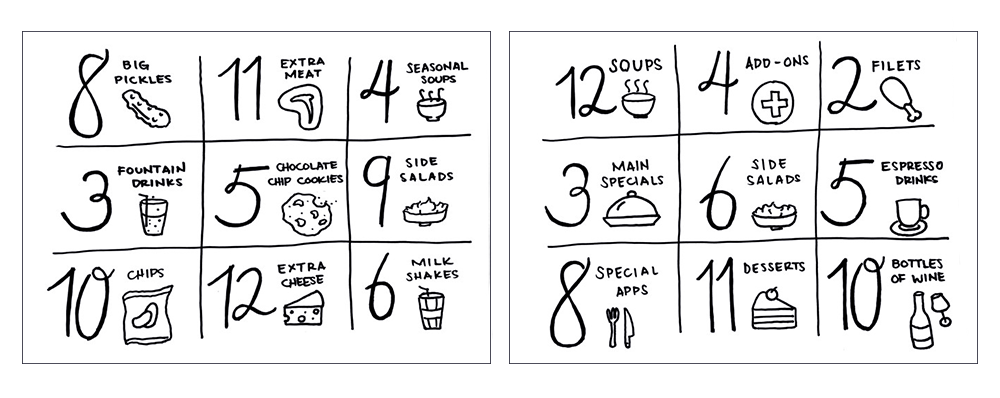
Tic-Tac-Toe Box Ideas
-
Add-ons (extra protein, avocado, bacon, upgrades)
-
Sides (premium fries, salads, soup)
-
Beverages (signature drinks, mocktails, bottled beverages)
-
Desserts (top sellers or new offerings)
-
Appetizers (high-margin shareables)
-
Limited-time specials (if you want to spotlight something seasonally)
Steps to Get Started
-
Decide on 9 products to promote (aim for a mix of categories).
-
Pick a target number for each item that would “move the needle” (realistic, but not too easy).
-
Make your tic-tac-toe chart (poster board or a simple table in Word).
-
Print copies for your team (or post a large version in the server station for everyone to see).
-
Choose a prize (cash, gift cards, first cut, preferred section, team outing, etc.).
-
Set a timeframe (one shift, one weekend, or a full week).
-
Pump up the team at pre-shift: goals, rules, how to mark progress, and what “counts.”
-
Start the game and keep the buzz alive by calling out updates and celebrating each completed box.
Tip: This game can also work beyond FOH. You can adapt the same 3×3 format for BOH goals like prep completion, cleanliness tasks, ticket times, training milestones, or expo accuracy, anything you want to make measurable and motivating.
The server games that actually move the needle aren’t the ones that reward a single “hero item,” they’re the ones that build consistent habits across the menu. When you gamify behaviors (suggesting an add-on, offering a second round, recommending a dessert), you’re improving the same levers that drive check average shift after shift. The biggest difference-maker is making it measurable and visible.
These games can lift check average fast, but the biggest wins come when you also capture more off-premise revenue directly. With ChowNow, restaurants can offer commission-free online ordering and use built-in marketing tools to turn one-time guests into regulars. Learn more about ChowNow.
Menu Bingo: A Server Game That Boosts Variety (Not Just One Item)
If you want to increase sales across multiple menu categories, apps, drinks, add-ons, and desserts, Menu Bingo is one of the easiest pre-shift games to run. Instead of telling servers to push one featured item, you’re encouraging balanced selling behaviors that naturally lift check average and keep the team engaged.
How Does Menu Bingo Work?
Create a bingo card where each square is a sales “win” (either an item category or a behavior). Servers mark a square when they hit it during service. First to get Bingo (three/four/five in a row depending on your grid) wins, or you can make it a “blackout” challenge over a full week.
Menu Bingo Square Ideas
-
Sell an appetizer to a 2-top
-
Add a premium side or add-on
-
Sell a dessert
-
Sell a second round
-
Upgrade a spirit / premium pour
-
Sell the featured special
-
Add protein to a salad/bowl
-
Sell a mocktail or specialty beverage
-
Pair an entrée with a beverage
-
Sell a take-home item (gift card, sauce, merch)
Steps to Get Started
-
Decide what you want to improve (check average, beverage attach rate, dessert sales, add-ons).
-
Build a 4×4 or 5×5 bingo card based on those goals.
-
Print copies for your team (or laminate and use dry-erase markers).
-
Set a timeframe (one shift, one weekend, or a Mon–Thurs stretch).
-
Pick a prize (cash, gift cards, first cut, preferred section, shift meal, etc.).
-
Keep the buzz alive: call out “almost bingo” updates at pre-shift and celebrate wins in real time.
Tip: To keep the game balanced, require at least one beverage square and one add-on square as part of the winning line, so it’s not all desserts or all apps.
Pairing Passport: A Check-Average Game That Feels Guest-First
The Pairing Passport is a simple way to increase check average without making servers feel like they’re “selling.” Instead, they’re recommending smart pairings, drinks with entrées, appetizers with beverages, or dessert with coffee, so the upsell feels natural and aligned with the guest experience.
How Does Pairing Passport Work?
Create a small “passport” list with 8–12 recommended pairings (based on your menu). Each time a server sells one of the pairings, they check it off. First to complete the passport wins, or award the prize to the server with the most pairings by the end of the week.
Pairing Passport Ideas
-
Signature cocktail + your top-selling entrée
-
Glass of wine + steak/pasta
-
Beer + burger/sandwich
-
Mocktail + salad/bowl
-
Appetizer + beverage pairing
-
Dessert + coffee / after-dinner drink
-
Premium upgrade pairing (top-shelf spirit, reserve wine)
-
Add-on pairing (extra protein + side, bacon + burger, etc.)
Steps to Get Started
-
Choose pairings that are easy to execute and have strong margins.
-
Write a simple one-line suggestion for each pairing so servers feel confident delivering it.
-
Print passports and track progress on a whiteboard in the server station.
-
Set a timeframe (one week is ideal, or run it during low-volume days).
-
Pick a prize and announce it at pre-shift with clear rules.
Tip: If your floor has uneven traffic, score it by pairings per shift (a rate) instead of total volume to keep things fair, and keep motivation high across all sections.
Keep Your Team Engaged While Growing Sales
Server games are one of the simplest ways to boost sales during low-volume shifts, because they turn upselling into something fun, measurable, and team-driven. Whether you run Tic-Tac-Toe to move a mix of add-ons and high-margin items, Menu Bingo to encourage well-rounded selling, or a Pairing Passport to increase check average through guest-first recommendations, the key is consistency: keep the rules clear, celebrate progress often, and rotate challenges so they stay fresh.
And if you want those sales gains to go beyond the dining room, make it easier for guests to order directly from you online, without third-party commissions. ChowNow helps restaurants drive more direct orders with built-in marketing tools to bring guests back. Learn more about ChowNow.
Frequently Asked Questions About Restaurant Server Games
What are restaurant server games?
Restaurant server games are short contests or challenges, often run during pre-shift, that motivate servers to practice upselling behaviors (like add-ons, pairings, and dessert suggestions) in a fun, measurable way.
Do restaurant server games actually increase sales?
They can, especially when the game focuses on repeatable behaviors that lift check average, like add-ons, upgrades, second rounds, and dessert. The key is keeping goals clear, tracking progress, and choosing targets that reflect what you want to improve.
What’s the best server game for increasing check average?
Games that encourage a mix of upsells tend to work best. Tic-Tac-Toe is great for add-ons and high-margin items, Menu Bingo helps drive variety across categories, and the Pairing Passport boosts check average through drink-and-food recommendations.