The 7 Best Restaurant Online Ordering Software, Reviewed
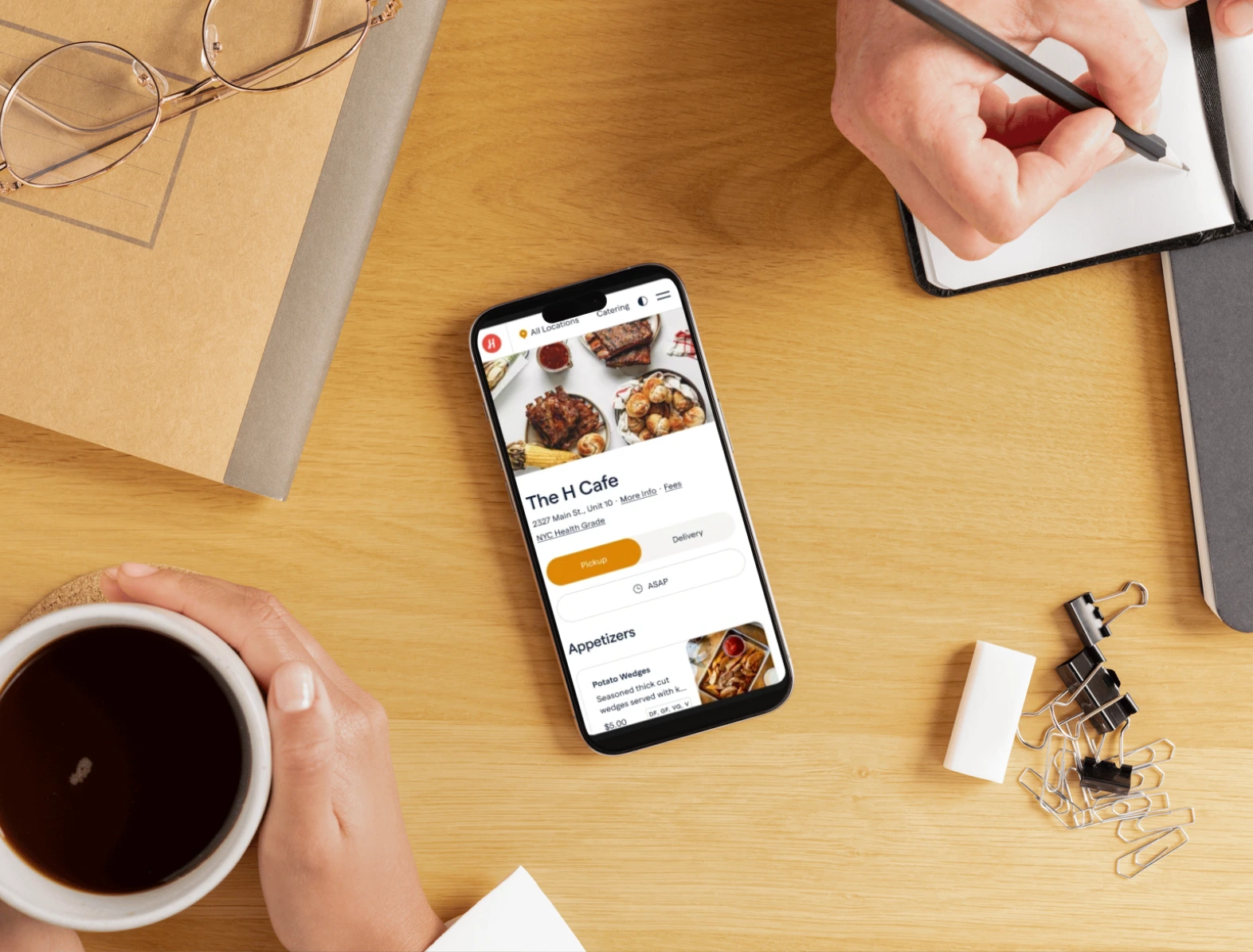
Picking the right online ordering platform sounds simple until you’re actually doing it.
Every option promises more orders, less work, and better margins. What separates a platform that delivers on that from one that quietly costs you money comes down to a few things: whether you keep your profits, whether you own your customer data, and whether the platform does any work to bring diners back after that first order.
This review covers seven of the most commonly used restaurant online ordering platforms. We read through hundreds of verified G2 reviews, tested each product, and talked with independent restaurant operators to find out what actually moves the needle. Here is what you need to know before making a decision.
7 best restaurant online ordering software at a glance
Platforms were evaluated based on G2 ratings, verified user review data, and direct product testing. Pricing reflects entry-level plans as of spring 2026.
If commission-free direct ordering is what you’re after, you already know where this lands. Book a demo or see pricing and plans.
What to look for in a restaurant online ordering platform
Before diving into individual platforms, here is what to weigh when making this decision:
- Commission structure. The spread between 0% and 30% in per order fees can represent $16,000 or more per year for a busy independent restaurant. Know what you’re paying on every single order, not just the monthly subscription.
- Customer data ownership. Some platforms collect your diners’ contact information and keep it. If you ever want to send a promotion or bring a lapsed customer back, you need to own that list.
- Built-in marketing tools. Direct ordering works best when paired with tools to bring diners back such as automated email, loyalty programs, push notifications. If those are a separate subscription, factor that into the cost.
- POS integration depth. A disconnected ordering system means manual entry, missed tickets, and kitchen errors. Ask how many POS systems each platform integrates with and what the failure rate looks like.
- How much you’ll have to manage. You’re running a restaurant, not a tech team. The best platform is one your staff can actually use without constant troubleshooting.
- What the checkout experience is like for your diner. A clunky ordering flow loses orders before they’re placed. Test it yourself before committing.
How these platforms were evaluated
Each platform on this list was evaluated using verified G2 review data, direct product testing, and conversations with independent restaurant operators. G2 scores referenced here reflect data pulled in spring 2026. Every platform has at least 50 verified reviews on G2.
1. ChowNow: Best for commission-free direct ordering and marketing for independent restaurants
Starting at $229/month
If you’ve spent any time pricing out third-party delivery apps, you already know the math doesn’t work in your favor. ChowNow was built to change that.
Every order placed through your ChowNow-powered website or branded app comes directly to you with no commission taken. For most restaurants, that means saving an average of $16,000 a year compared to relying on third-party platforms.
Beyond keeping more of what you earn, every order also comes with diner contact information that belongs to you, not a delivery platform. That data is where ChowNow’s broader value kicks in. The Automated Email Marketing tool writes, designs, and sends branded campaigns on your behalf, driving an average of $34,000 in additional revenue and 60% more direct orders for restaurants that use it. There is no marketing team required. You set it up and it runs.
If you want to take it further, ChowNow’s Branded Mobile App gives your restaurant its own app in the App Store and Google Play. Restaurants with a branded app see an average of 2x more direct orders than those without one. For independent operators competing against chains with polished apps, that’s a gap worth closing.
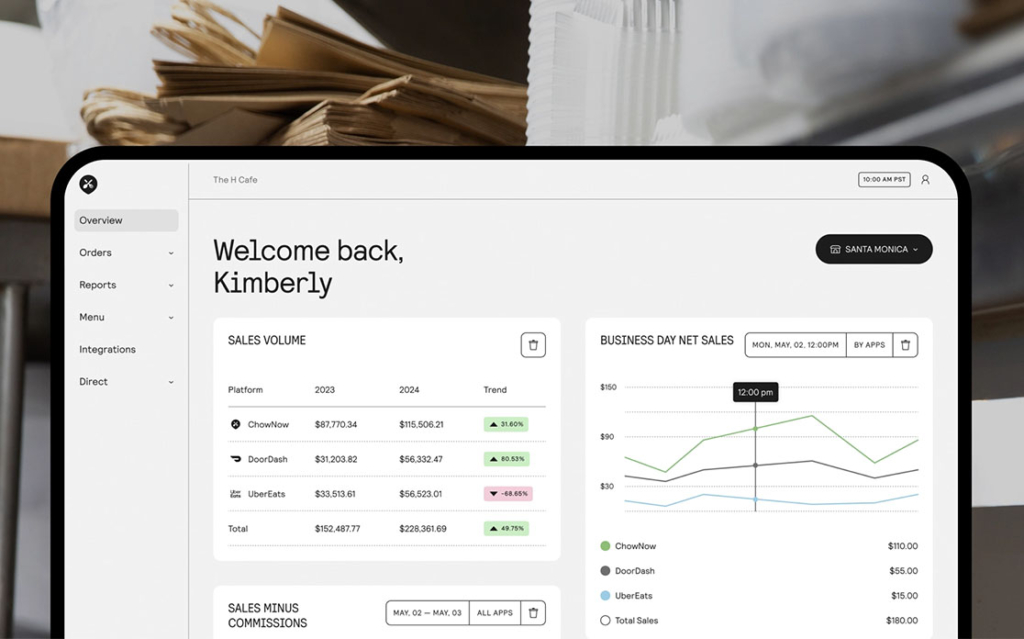
On the operations side, ChowNow integrates with 30+ POS systems at a 99.9% success rate, so orders flow into your kitchen without manual entry. Everything from direct orders, third-party orders, and performance data sits in one dashboard.
ChowNow holds a 4.6 out of 5 rating on G2 across 73 verified reviews, with a 91% ease-of-use score and a 90% ease-of-setup score. It has been ranked #1 on G2 for Best Relationship, Best Support, and Easiest to Do Business With among food delivery providers.
What stands out about ChowNow:
- Commission-free ordering, owned customer data, and automated email marketing all work together in one platform. Each piece reinforces the others, so you’re not stitching together separate tools to get the same result.
- The support model is built for independent operators. You get a dedicated restaurant success team, and both your restaurant and your diners have access to 24/7 live support.
What G2 users say:

“ChowNow is easy to use and integrates perfectly with our POS system. It’s an easy and reasonably priced way to increase revenue for your business.”
Want to read the full reviews? See them directly on G2 here.
One more thing to keep in mind:
- The dashboard has a short learning curve. Most operators get comfortable with it quickly, but budget a little setup time if your team is new to online ordering tools.
2. Owner.com: Best for independent restaurants wanting an AI-powered all-in-one platform
Starting at $499/month
Owner.com bundles website building, online ordering, customer CRM, loyalty, and marketing automation into one platform. Rated 4.8 out of 5 on G2 with more than 300 reviews, it’s the highest-rated tool in this category by review volume.
The strongest selling point is how fast it gets you up and running. Reviewers consistently note that Owner.com sets up the core pieces quickly, often within a day or two, and that the AI-assisted tools handle menu setup and basic website design without requiring design skills.
The trade-off worth understanding: at $499/month, it’s the most expensive entry point on this list, and Owner.com charges a 5% fee on direct orders. If your goal is keeping more of every dollar you earn, that fee structure narrows the margin advantage you get from moving diners off third-party platforms.
Owner.com also gives you more control over your marketing but that means more hands-on management. If you want campaigns to run automatically without much input from your side, ChowNow’s Automated Email Marketing does more of that work for you.
What stands out about Owner.com:
- Website, ordering, CRM, and loyalty all live in one place, which means fewer subscriptions and less integration work to get everything talking to each other.
- Onboarding speed is consistently praised. Operators report getting their core setup live quickly, with the support team guiding the process.
What G2 users say:
“The implementation process was smooth and straightforward. Customer support has been responsive and helpful whenever we’ve needed assistance. It centralizes online ordering, customer data, and marketing tools in one place.”
“One thing I don’t love is the 5% customer fee that is applied to both pickup and delivery orders. I understand the fee for delivery orders, but for pickup orders it feels less fair to customers since there is no delivery service involved. I think it would be better if pickup orders had a lower fee or no fee at all.”
One more thing to keep in mind:
- At $499/month plus a 5% fee on direct orders, the cost adds up quickly. Run the numbers against your order volume before committing.
3. Toast Online Ordering: Best for operators already running Toast POS
Starting at $69/month
If your restaurant already runs on Toast, adding Toast Online Ordering is the path of least resistance. Orders flow directly into your kitchen display system, menu updates sync automatically, and everything lives in the same dashboard you’re already using for in-person service. The integration is genuinely clean.
The catch is that Toast Online Ordering’s value is almost entirely dependent on already being in the Toast ecosystem. If you’re on Square, Clover, or another POS, switching to Toast means new hardware, new contracts, and a full implementation process.
For operators already on Toast, it’s a strong choice. For everyone else, it’s a significant investment before you even get to the online ordering piece.
One thing worth knowing if you’re on Toast: you don’t have to choose between Toast POS and a commission-free direct ordering platform. ChowNow integrates directly with Toast. Orders from ChowNow’s direct web ordering, branded app, and third-party channels all flow into one device and get sent straight to your Toast POS. So if you want to keep Toast as your POS and add commission-free direct ordering and built-in marketing on top of it, that’s a setup that works.”
G2 reviewers also note that Toast is designed for always-on connectivity. In areas with unreliable internet, outages can affect order processing, so it’s worth having a fallback plan.
What stands out about Toast Online Ordering:
- For Toast POS users, it’s the smoothest integration on this list. Orders, menus, and reporting all live in one place.
- The analytics tools are detailed. If you want visibility into sales patterns, item performance, and customer behavior without exporting spreadsheets, Toast delivers that.
What G2 users say:
“I like that I can set up promos quickly, and I can also get help fast through my CSM or the Toast Support Center. Toast makes it simple for me to track guest orders, pull reports, and do more as needed.”
“Toast’s hardware is reliable, but you can’t mix and match with cheaper third-party options. If something breaks or you want to expand, you’re buying Toast-branded gear at Toast-branded prices.”
One more thing to keep in mind:
- If you’re not already on Toast POS, factor in the full switching cost before comparing it to other options on this list.
4. Square: Best for restaurants starting out with a simple, affordable POS and online ordering setup
Starting at Free tier available; 2.6% + 15¢ per transaction
Square is the lowest-barrier entry point on this list. The free tier covers the core POS and online ordering without a monthly fee and you only pay per transaction.
If you’re testing online ordering for the first time, or running a lower-volume operation, that structure removes the upfront commitment and gives you a way to see whether investing in a fuller platform makes sense. G2 rates it 4.7 out of 5 across 825+ reviews, with a 9.5 ease-of-use score and a 9.4 ease-of-setup score.
The trade-off worth understanding before you commit: the features that actually build repeat business, such as email marketing, loyalty programs, a branded app, are paywalled behind Square’s paid tiers ($49/month for Plus, $149/month for Premium).
As your order volume grows, transaction fees also accumulate in ways that can make a flat monthly fee more predictable. G2 reviewers note that some operators eventually switch to cheaper payment processors as their sales volume increases.
If you’re already on Square, it’s worth knowing that ChowNow integrates directly with Square. ChowNow aggregates your direct web orders, branded app orders, and third-party delivery app orders into one device and sends them straight to your Square system. So if you want commission-free direct ordering and built-in marketing without switching your POS, Square and ChowNow can run together.
What stands out about Square:
- The free entry point is genuine. No monthly fee to get started means you can test online ordering without a financial commitment, which is useful if you’re not yet sure of the volume.
- Setup is fast. G2 reviewers consistently note that Square gets you up and running quickly and most restaurants can be live within a day, especially if you’re already familiar with the hardware.
What G2 users say:
“This is an easy to use and easy to set up program for small transactional businesses. It provides a multitude of reports for accounting and taxes and integrates generally well with QuickBooks Online.”
“Some of the extra features come with extra costs, and those can add up quicker than you’d expect. It would be nice if more features were included in the base price, especially for small businesses trying to stay on budget.”
What to keep in mind:
- Per-transaction fees accumulate at higher volumes. For restaurants processing significant order numbers, a flat monthly fee model tends to be more cost-effective over time.
5. Popmenu: Best for restaurants with a strong visual menu that want website and ordering in one place
Starting at Pricing on request
Popmenu’s core idea is that your menu is your best marketing asset, and most restaurants aren’t using it. The platform builds your website around a dynamic, visual menu — each dish gets its own page with photos, descriptions, and modifiers — structured to show up in search results when diners are looking for a specific dish near them.
If you have strong food photography and a distinct menu, this approach can drive meaningful organic discovery. Ordering is built directly into the website experience, so diners never get redirected to a separate page. Popmenu also includes marketing automation and a loyalty program, though G2 reviewers note these features take more time to set up than the website and ordering tools.
Pricing isn’t listed publicly, which makes it harder to compare against other options without getting on a call first. And the platform rewards restaurants that invest in building out their menu content. That’s why if your photos are limited or your menu descriptions are sparse, the platform’s strongest features won’t be as useful.
What stands out about Popmenu:
- If you have great food photography, the menu-first website approach can genuinely improve how your restaurant shows up in local search results.
- Ordering stays inside your website. Diners don’t get sent to a separate page to complete their order, which reduces drop-off.
What G2 users say:
“I like how easily it integrates with our system. It’s straightforward to use, and the implementation was fast, simple, and user-friendly.”
“I find the marketing support through Popmenu lacking in personalization, which is particularly challenging for our small, specialized restaurant. The need for tailored marketing solutions to align with our niche offerings is not adequately addressed.”
— Theo O.
What to keep in mind:
- The platform’s value is proportional to your menu content. Without strong photography and dish descriptions, the core features don’t deliver as much.
6. Olo: Best for multi-location restaurant brands managing digital ordering at scale
Pricing is available on request
Olo is built for restaurant brands managing ordering across dozens or hundreds of locations. If that’s where your restaurant is headed, or where it already is, Olo handles the things smaller platforms can’t such as maintaining menu consistency across every location, routing orders efficiently at high volume, and giving you aggregated reporting across your entire portfolio.
If you’re running an independent restaurant or a small group of locations, Olo is not the right platform right now. The pricing, implementation process, and feature set are built for enterprise-scale operations. The platforms higher on this list will serve you better, at a fraction of the complexity.
What stands out about Olo:
- Built for scale in a way that smaller platforms genuinely aren’t. Multi-location menu management, order routing, and reporting work consistently at high volume.
- A broad integration ecosystem connects with most major POS systems and third-party delivery platforms.
What G2 users say:
“Olo has a ton of integrations, is the biggest player in the market, has solid uptime and is a solid choice for anyone wanting to implement online ordering.”
“For startup restaurants it is quite expensive and Olo setup requires high skills and is not easy.”
What to keep in mind:
- If your POS or delivery provider isn’t one of Olo’s primary integrations, setup can get complicated.
7. DoorDash for Merchants: Best for restaurants prioritizing marketplace delivery reach over margin control
Starting at Commission-based, typically 15–30% per order
DoorDash for Merchants and DoorDash the delivery network are two different things. DoorDash for Merchants is the consumer marketplace: it’s where diners scroll, discover restaurants, and place orders through DoorDash’s app. DoorDash as a delivery network is the driver infrastructure that actually fulfills those orders. You can use one without the other.
DoorDash for Merchants puts your restaurant in front of one of the largest delivery audiences in the country. If you need delivery demand without building an audience from scratch, that reach is worth something, especially for a restaurant opening in a new area or trying to fill slower shifts.
What DoorDash for Merchants is not is a direct ordering platform. Commission rates of 15% to 30% come out of every order, and your diner’s contact information goes to DoorDash, not to you. That means every repeat order they place on DoorDash costs you another commission, and you have no way to market directly to them.
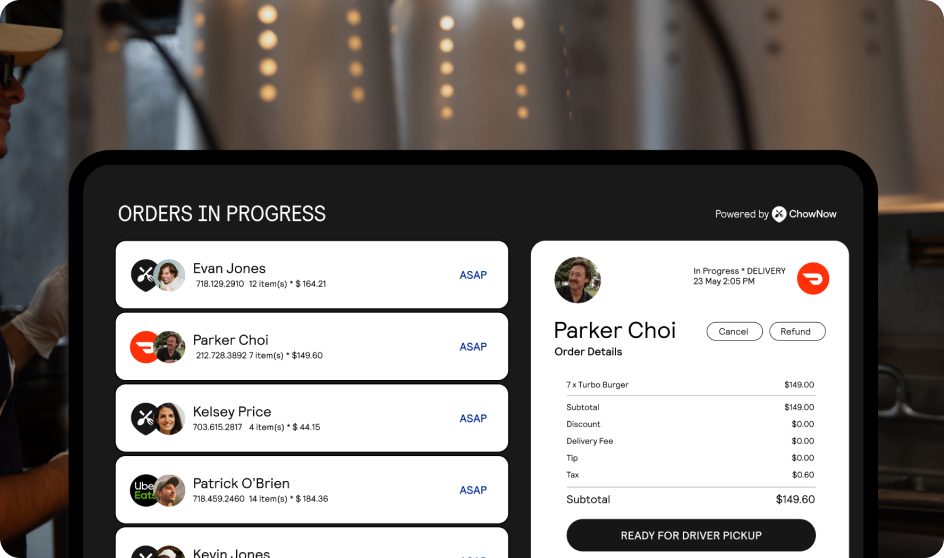
ChowNow integrates with DoorDash at the operations level. It pulls your DoorDash marketplace orders into the same dashboard as your direct ChowNow orders, auto-accepts them, and sends them straight to your POS. Menu changes push across both platforms at the same time. So if you’re running DoorDash for reach, ChowNow keeps everything manageable on the back end while building the direct customer relationships DoorDash doesn’t give you.
What stands out about DoorDash for Merchants:
- The reach is real. DoorDash puts your restaurant in front of a large pool of delivery-intent diners who may not have found you through other channels.
- The Merchant Portal is reasonably straightforward to manage, and the delivery network covers most urban and suburban markets well.
What G2 users say:
“DoorDash for Merchants helps us capture as much revenue as possible by having the largest market share among its competitors. This extensive market share ensures we maximize our potential earnings and reach a wider customer base.”
“The biggest downside to DoorDash for Merchants is the fees — they can add up quickly and really cut into margins, especially for smaller restaurants. It can also feel like you have less control over the customer experience once the food leaves your hands, since delivery issues often reflect back on the restaurant.”
What to keep in mind:
- At 15% to 30% per order, commissions add up fast. Run the numbers on what your DoorDash volume actually costs you before treating it as your primary ordering channel.
Which online ordering platform is best for independent restaurants?
Every platform on this list does something well. The question is what matters most for your restaurant. If you’re paying 15% to 30% on every third-party order and ready to change that, ChowNow gives you the commission-free direct ordering, built-in marketing, and POS integrations to make it work without switching the systems you already rely on.
Book a demo to see how ChowNow fits your restaurant.
Frequently asked questions about Restaurant Online Ordering Software:
What is restaurant online ordering software?
Restaurant online ordering software lets your diners place food orders directly through your website, app, or connected ordering channels. Depending on the platform, it may also include tools for menu management, POS integration, customer data collection, marketing automation, and delivery coordination.
What is the difference between direct ordering software and a delivery marketplace?
Direct ordering software, like ChowNow, lets your diners order through your own website or branded app without you paying a per-order commission. You own the customer relationship and keep their contact information for future marketing. Delivery marketplaces, like DoorDash or Grubhub, bring orders from their own user base but charge commissions of 15% to 30% per order and retain customer data. Most independent restaurants benefit from using both: marketplaces to bring in new diners, and direct ordering to build the relationship and protect margin over time.
How much does restaurant online ordering software cost?
It depends on the platform and the model. Some charge a flat monthly fee, ChowNow starts at $229/month, others charge per transaction or take a percentage of each order. When you’re comparing options, factor in per-order fees, setup costs, and what’s included in the base plan. A lower monthly fee that requires separate marketing subscriptions, or a commission on every order, can end up costing more in practice than a higher flat rate.
What should I look for in an online ordering platform for my restaurant?
For most independent restaurants, the three things that matter most are commission structure, customer data ownership, and built-in marketing tools. A platform that charges no commissions and gives you your diners’ contact information puts you in control of your revenue and your customer relationships. One that includes automated email marketing and a loyalty program means you’re not starting from scratch every time you want to bring someone back.
Is ChowNow a good fit for a small, single-location restaurant?
ChowNow is built specifically for independent restaurants, including single-location operators. The flat monthly fee means your cost doesn’t go up as your order volume grows. G2 reviewers rate ChowNow 91% for ease of use and 90% for ease of setup. These are scores that reflect how the platform performs for operators running a restaurant, not a technology department.
Does ChowNow integrate with Toast and Square POS?
Yes to both. ChowNow integrates directly with Toast POS and Square POS. Orders from ChowNow’s direct web channel, branded app, and third-party delivery platforms auto-accept and route straight to your existing system — no manual entry, no extra tablet. If you’re already running Toast or Square, you can keep your POS and add commission-free direct ordering on top of it. See all POS integrations at get.chownow.com/integrations/all/
Can I use ChowNow and DoorDash at the same time?
Yes, and most independent restaurants do. ChowNow’s DoorDash integration is the operations layer as it pulls those DoorDash orders into the same dashboard as your direct ChowNow orders, auto-accepts them, and sends them to your POS. Menu updates push to both platforms at once. See how it works at get.chownow.com/integrations/doordash/