The Hidden Cost Of Ignoring Your Online Presence

Whether you’re actively managing it or not, your online presence is constantly shaping how customers perceive your restaurant, and it’s often the deciding factor in whether they place an order with you or move on to someone else.
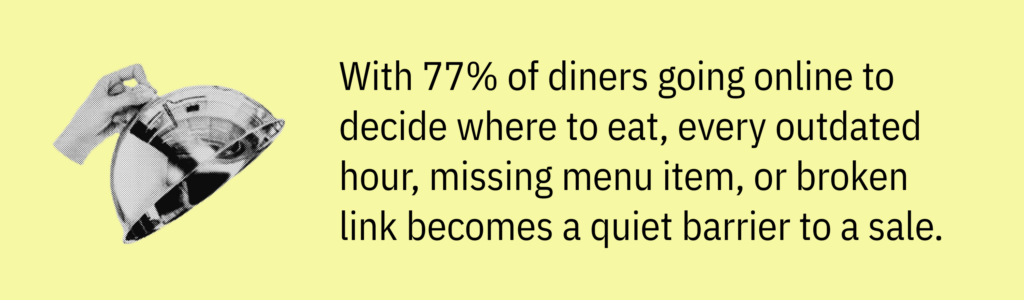
With 77% of diners going online first to decide where to eat, every outdated hour, missing menu item, old photo, or broken link becomes a quiet barrier between you and a sale.
Your online presence goes beyond your restaurant website—it’s your Google Business Profile, your online ordering experience, your reviews, your social channels, and every third-party listing tied to your name.
When those touchpoints are inaccurate or inconsistent, trust drops, visibility declines, and revenue slips away through missed orders, bad reviews, and unnecessary reliance on third-party apps.
This article breaks down those hidden costs—and why tightening your online presence directly protects your bottom line.
What Counts As Your Online Presence (And Why It Matters)

Your online presence is bigger and more influential than most restaurant operators realize. Before a diner ever decides to order from you, they’re forming an opinion based on scattered pieces of information they’ve found across the internet—some you control directly, some you don’t.
Here’s what shapes their opinion.
Your Google Business Profile is Your Digital Front Door
Your Google Business Profile is often the first thing people see when they search for your restaurant. It displays your hours, phone number, reviews, photos, and a link to your website or ordering page—all in one place.
If your hours are wrong, your photos are unappetizing, or your link is broken, that first impression quickly becomes a lost opportunity.
Your Website and Online Ordering Pages Are Visited Frequently
Many diners still go directly to a restaurant’s website to browse the menu or place an order. A slow site, clunky user experience, or missing ordering link can lead people to abandon their search—or worse, order through a third-party app that charges you a hefty fee.
Your website, branded app, and direct online ordering system are where you can control the experience and keep more revenue in your pocket.
Social Media Is Where You Stay Top-of-Mind and Connect with Diners
Social Media, like Instagram, Facebook, and even TikTok, give you a chance to stay visible and engage with your audience.
An unused or outdated feed makes your restaurant look inactive, even if you’re open and thriving. Regular updates, quality photos, and quick replies to comments go a long way in building customer loyalty.
View this post on Instagram
Reviews and Listings Are the New Word of Mouth
Platforms like Yelp, TripAdvisor, and OpenTable are where guests leave feedback, and where future diners decide whether to give you a try.
Reviews, star ratings, and how (or if) you respond to both positive and negative comments all influence whether a customer will trust your restaurant.
It’s not just about good food anymore—it’s about public proof that you care.
Don’t Forget Menus and Hours Across All Platforms
Guests check menus and hours on everything from DoorDash to Apple Maps to local directories. If your hours aren’t updated or your menu is missing or outdated, they’ll likely leave frustrated and have second thoughts about trying your restaurant in the future.
You have more listings than you think, and they all need regular attention.
How Neglecting Your Online Presence Quietly Costs You Money
Most restaurant owners don’t ignore their online presence on purpose—it just falls to the bottom of a very busy to-do list.
But that’s exactly how revenue slowly disappears: not from one big issue, but from small, avoidable gaps like outdated details, inconsistent info, and moments when diners can’t get what they need fast enough.
Here are the most common causes.
Outdated Menus Create Missed Orders
If your online menus have old pricing, are missing items, or have a confusing layout, potential customers are likely to bounce before placing an order.
On their own, these details might feel small, but each one represents a missed order and time a customer simply moved on because they wanted to find someone else who could make ordering feel effortless.
Inaccurate Hours Drive Diners Toward Competitors
Few things frustrate diners more than discovering a restaurant is closed when online listings say it’s open.
Not only does it result in immediate lost orders, but it also triggers negative reviews that keep future customers away. Even if the mistake seems minor, like staying open later on weekends or changing weekday hours, those discrepancies directly shape your revenue and your reputation.
Low-Quality Photos Cost You Conversions
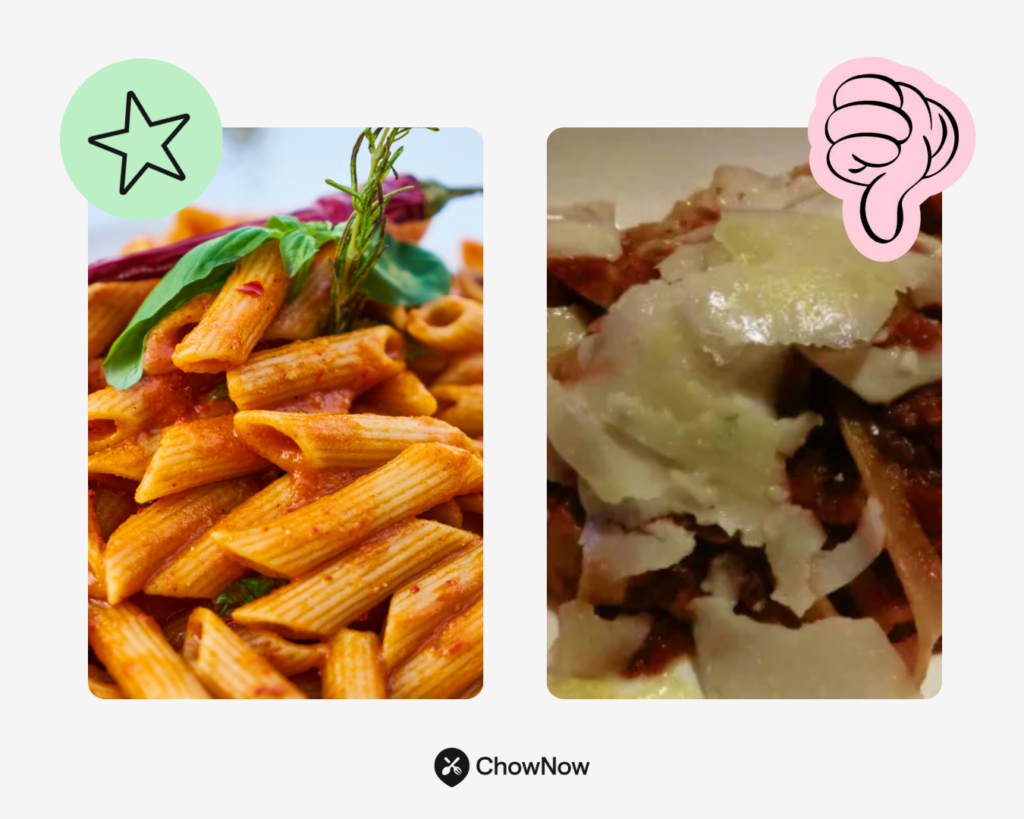
The quality of your photos is directly tied to how well you convert diners to order from you. When images look outdated, dark, or inconsistent with what customers receive in real life, diners hesitate to commit.
A refreshed set of clear, appetizing photos makes the decision-making process quicker and more confident, while poor visuals create doubt and reduce the likelihood that someone follows through with an order.
How Inconsistent Information Hurts Visibility And Customer Perception
Even if your food is great and your service is strong, inconsistent online information can make your restaurant look unreliable to both diners and search engines. These mismatches create confusion, weaken trust, and often push customers toward a competitor without you ever knowing it happened.
Conflicting Details Confuse Both People and Search Engines
Let’s say your hours are different on Google, Facebook, and Yelp. Which one should a customer trust?
Inconsistent details not only confuse diners, but they can also damage your local SEO rankings. Google wants to show the most reliable businesses first, and conflicting information tells it you’re not one of them.
Reviews Left Hanging Hurt Your Reputation
Responding to reviews (especially the negative ones) shows that you care. Ignoring them, on the other hand, sends a very different message.
Here’s what not managing your online reputation can cost you:
- Lost trust from potential guests browsing your reviews
- A decline in repeat visits from unsatisfied customers
- Fewer opportunities to turn a bad experience into a loyal following
Timely replies show guests that someone is paying attention—and that their feedback matters.
Incomplete Listings Push Guests Toward Competitors
When a customer checks a listing and can’t find crucial details, like hours, address, menu links, and photos, they simply move on. They don’t wait around for clarification.
Competitors with fully updated profiles benefit from this gap, even if their food or service isn’t better.
A strong online presence doesn’t just attract new customers—it prevents unnecessary losses to restaurants that do a better job keeping their information organized and accessible.
The Financial Impact Of Relying Too Heavily On Third-Party Apps

When your online presence isn’t strong enough to guide diners to your own website or ordering channels, they default to the platforms they know best: third-party marketplaces.
That shift might feel harmless in the moment, but it subtly redirects revenue, customer relationships, and long-term loyalty away from your business.
Weak Online Visibility Sends Customers to Third Parties
If your Google listing is missing key information or your website is hard to navigate, customers will often order through a third-party marketplace simply because it’s easier.
That means the first interaction a new diner has with your restaurant happens on a platform you don’t control. From that point on, the marketplace—not you—decides how your brand appears, how your menu is displayed, and how much that order will cost you.
Commission Fees Eat Into Orders You Could Have Owned
Most third-party delivery apps charge restaurants anywhere from 20% to 30% in commission fees per order. That might seem manageable on a single transaction, but over time, it adds up to thousands of dollars that could be yours.
When a customer orders through a third-party app instead of your direct ordering system, you:
- Pay more to serve the same customer
- Lose access to customer information, making it very difficult to build diner loyalty
- Have less control over the guest experience
- Reinforce the habit of ordering from the app instead of you directly
The real cost isn’t just the fee—it’s how these platforms slowly erode your ownership of the customer relationship.
Outdated Menu Data Creates Refunds, Cancellations, and Bad Experiences
When third-party platforms pull outdated or inconsistent menu information, customers often end up confused or disappointed. This can lead to:
- Orders placed for items you no longer offer
- Pricing mismatches that require refunds
- Incorrect dish descriptions that create complaints
- Missing modifiers or options that slow down your kitchen
Each of these issues costs you twice—once in the immediate refund or cancellation, and again in the long-term damage to customer confidence.
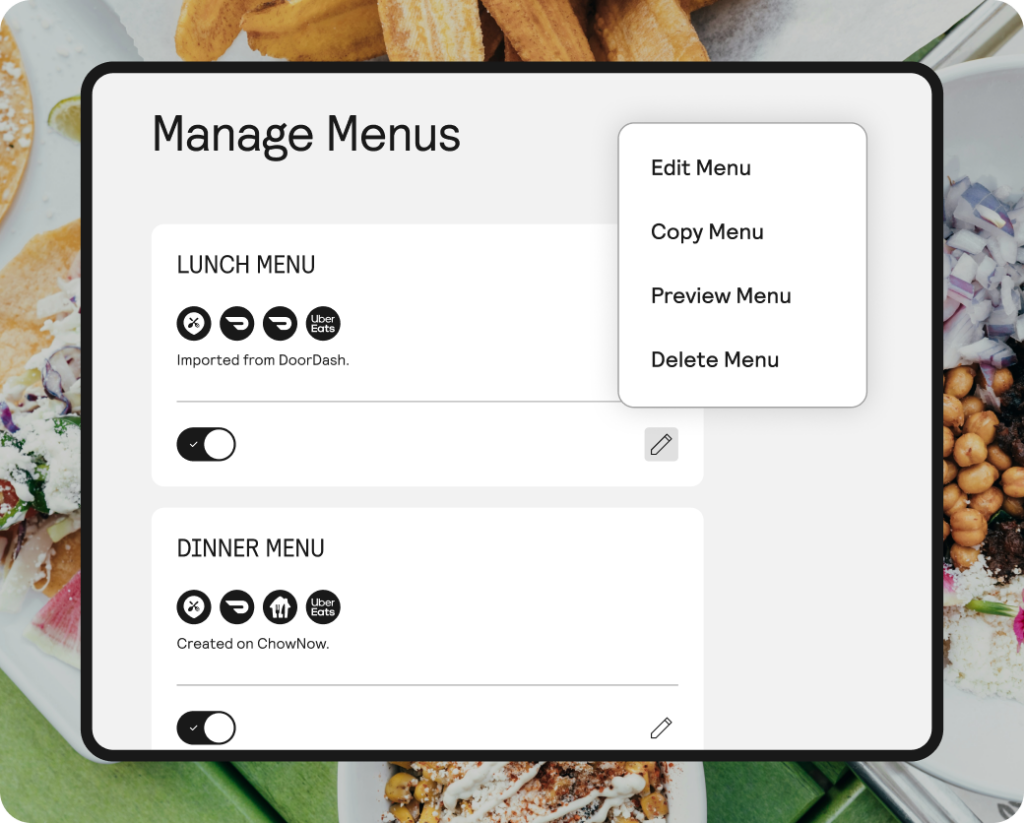
The good news is that maintaining a strong online presence doesn’t require a massive overhaul, just a little regular maintenance. By spending a few minutes each month polishing these details, you ensure that every guest who finds you online feels confident, informed, and ready to order. Use this simple checklist to keep your digital doorway just as welcoming as your physical one.
Your Online Presence Is One of the Easiest Places to Grow Sales
Your online presence doesn’t have to be perfect—it just needs to be accurate, consistent, and easy to use. Start there, and you’ll uncover one of the simplest, most cost-effective ways to grow your restaurant’s sales.
Contact ChowNow to learn how Direct Online Ordering can help you strengthen your online presence and drive more commission-free orders.
Restaurant Online Presence Frequently Asked Questions
What counts as an online presence for a restaurant today?
A restaurant’s online presence includes every digital location where customers find information about your business. This includes your Google Business Profile, website, online ordering page, social media accounts, review platforms, mapping services, and any third-party menu listings. Search engines use these sources collectively to understand your business, and diners rely on them to decide where to eat.
How does outdated information affect restaurant visibility?
Outdated or inconsistent information reduces your chances of appearing in local search results. Search engines prioritize businesses with accurate, up-to-date data, and mismatches across platforms signal unreliability. When your hours, menu, or address are incorrect, algorithms are less likely to recommend your restaurant, which lowers your visibility to nearby diners.
What online factors influence customer trust the most?
Clear, accurate, and consistent information plays the biggest role in building trust. Diners look for up-to-date hours, current menus, reliable pricing, recent photos, and timely responses to reviews. When these details match across platforms, customers feel confident choosing your restaurant.
How often should restaurants update their online listings?
Restaurants should review and update their online listings any time something changes. For example, hours, menu items, pricing, holiday schedules, or ordering links. As a best practice, operators should check their core listings at least once a month to ensure accuracy and fix issues that may have appeared on third-party platforms.
How can restaurants reduce dependency on third-party delivery apps?
Restaurants can reduce their reliance on third-party apps by strengthening their direct online ordering presence, using tools like a branded mobile app and email marketing to drive repeat business. Promoting your direct channels across Google, social media, and in-store materials helps convert more orders without paying third-party commission fees.