Food Photography for Restaurants: Simple Tips to Attract More Diners
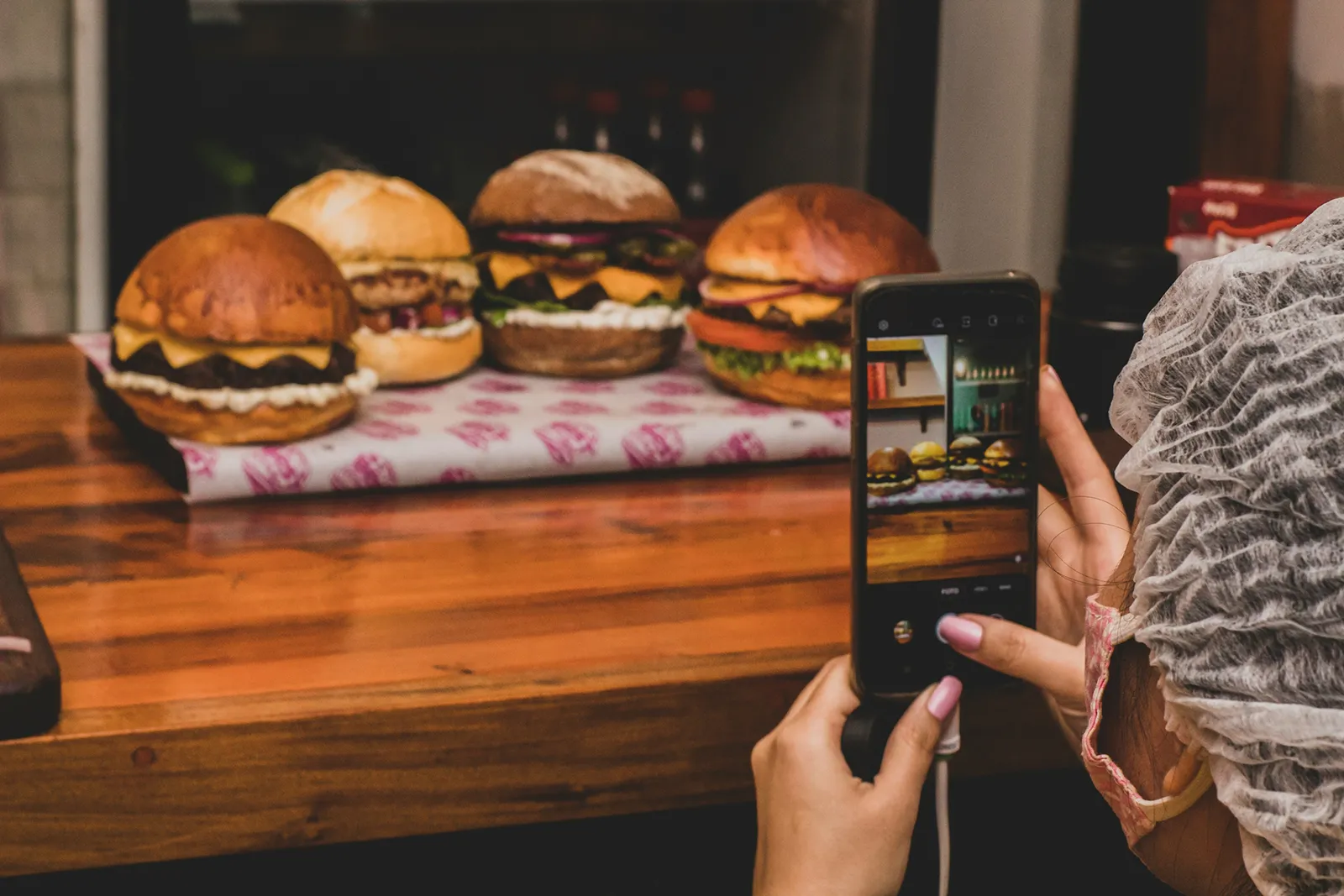
When you think about what convinces diners to try a new place, it often comes down to visuals. People eat with their eyes first, and the food photos they see online can be the deciding factor in whether they place an order or move on to another option.
That’s why food photography for restaurants isn’t just about making dishes look pretty—it’s about creating images that capture the freshness, flavor, and personality of your brand.
Whether you’re sharing on social media, updating your menu online, or building out a website, high-quality food photography helps your dishes stand out, builds trust with diners, and drives more direct orders.
The problem is, how do you capture these food images in a way that feels authentic and appetizing while aligning with your restaurant’s identity?
The good news is, it’s not as difficult as you might think, and you don’t need to be a professional food photographer or invest in a ton of expensive cameras or gear.
With the right photography tips and a little practice, you can start creating food photos that grab people’s attention and inspire them to place an order.
In this article, you’ll learn:
- Why food photography builds trust and drives more orders
- Easy ways to take better food photos without fancy equipment
- How to make food photography a part of your daily workflow
Why Food Photography Matters For Restaurants
First impressions happen fast, and in the restaurant industry, they usually start online.
Before a guest ever walks through the door, they’re scrolling through your menu, reviews, and most importantly, food photos.
Customers are interested in food images not just because they show what’s on the menu—they also help shape their expectations and tell them what it will be like to dine at your restaurant.
Strong food photography also doubles as brand storytelling. When your images highlight textures, colors, and plating, they do more than make a dish look delicious—they communicate what your restaurant stands for.
For example, a rustic bowl of pasta with warm natural light gives off a cozy, homestyle vibe, while a dish of seared scallops with microgreens will use sharp lines, clean plating, and lean heavily on food photography composition to showcase a fine dining feel.
In other words, how you shoot food builds trust in what you’re offering and helps diners understand your brand before they’ve even taken a bite.
Finally, great visuals fuel marketing. On social media, eye-catching food images tend to drive more likes, shares, and engagement than text-heavy posts ever will.
On your website or Google Business Profile, professional-looking restaurant photography makes your space and menu feel polished and reliable.
And when those images inspire confidence, diners are far more likely to place a direct order instead of clicking away to a third-party app.
Simple Tips To Elevate Your Food Photos
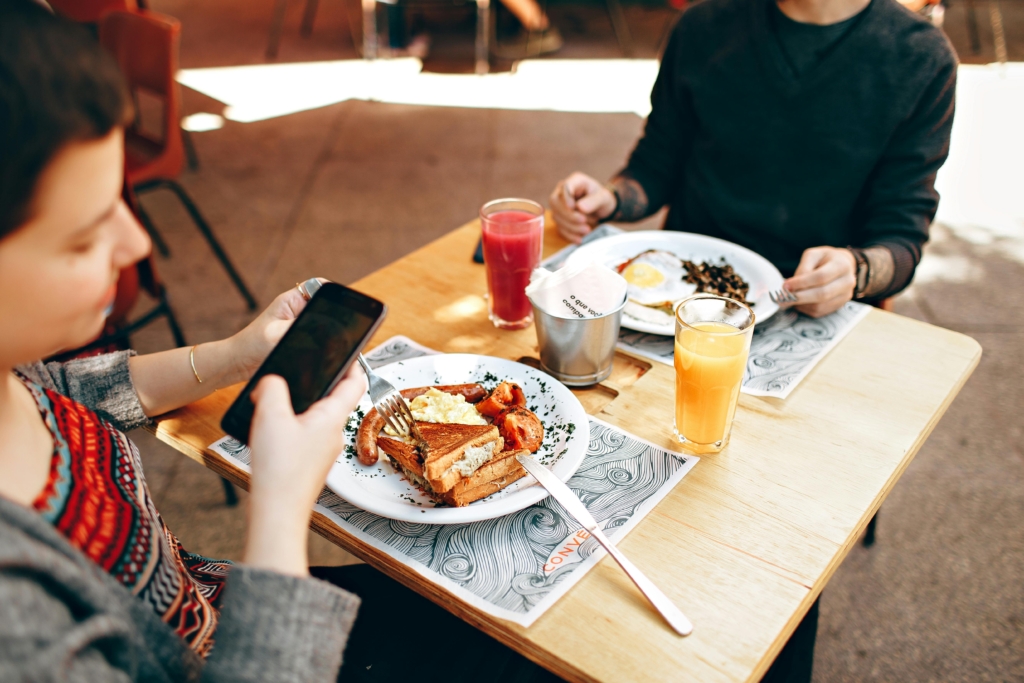
As we said, executing and improving your food photography doesn’t require fancy gear, hiring a food stylist, or a full-blown studio lighting setup.
With a few small changes, you can create food photos that look more professional and capture the attention of diners scrolling online.
Use Diffused Natural Light Over Direct Light
Lighting is EVERYTHING when it comes to not just food photography, but photography in general.
Whenever possible, shoot near a window using natural light—the light going through the window softens it and helps bring out the true colors and textures of your dish.
Avoid direct sunlight, which causes sharp shadows and blown-out highlights. If you’re shooting during prep or service, position plates so they’re lit from the side for a softer, more appetizing look.
The best time of day to shoot photos is during “golden hour”—the hour after sunrise and the hour before sunset. The diffused light coming through the atmosphere can make your food photos feel incredible.
Choose Angles That Highlight Texture and Detail
The way you position the camera changes how diners experience a dish. Overhead shots work well for capturing a full plate, while a 45-degree angle can show off layers, height, and texture. Close-ups help guests notice details like grill marks or garnish.
Playing with perspective is one of the easiest ways to upgrade your food shots. For example, burgers or stacked food items look best when shot from the side, while bowls or salads almost always look best when shot from above.
Keep Backgrounds Simple and Uncluttered
Too much clutter in the frame pulls attention away from the main focus: the food. Use neutral surfaces like wooden tables, parchment paper, or plain plates to simplify the shot.
A clean background helps your food photos feel more polished and lets the colors and textures take center stage.

Building A Consistent Visual Style
After you’ve practiced the tips above, the next step is building a consistent look with your restaurant photography.
This makes it easier for diners to recognize your brand, and on social media platforms like Instagram, your photo grid will have a cohesive feel that looks polished and persuasive.
Align Your Photo Style With Your Brand
The way you shoot food should match the atmosphere of your restaurant. For example, a fast-casual restaurant might feature bright colors and playful photos, while a fine-dining spot may favor moody light and an elegant composition.
Keeping your imagery consistent across all platforms makes your brand more memorable.
Use Consistent Colors and Editing Choices
Every adjustment in editing—from color saturation to contrast—affects how your food photos feel. During post-production, even small tweaks, such as using a white balance tool, can ensure your dishes look true-to-life across all platforms.
Pick an editing style and stick with it. Using the same filters or presets makes sure your food photography has a consistent look, whether you’re posting on Instagram, your restaurant website, or a delivery app.
Balance Polished Shots With Authentic Moments
Professional-looking food shots are important, but mixing it up with behind-the-scenes restaurant photos, like your team plating a dish or pouring a drink, adds personality and authenticity to your brand. Guests love seeing the process, so don’t be scared to have fun and share who you are.
This balance shows not only how great your food looks, but also the care and effort that goes into creating it.
Creating Content For Different Formats

One of the great things about investing in high-quality food photography is that it can be repurposed across multiple platforms.
A single restaurant shoot can give you great photos for your website, social media, online ordering systems, and email campaigns without having to take pictures for each platform from scratch.
The key is planning ahead so every photo serves more than one purpose.
Static Posts vs. Vertical Formats
Your restaurant website and online menu will typically call for horizontal or square photos, while platforms like Instagram Stories, Reels, and TikTok lean on vertical photos and videos.
When doing a food shoot, remember to plan ahead for both formats so you’re not left adjusting an image in post-production, trying to fix an image that doesn’t work. A simple trick is to leave a little extra space around your shot when taking photos—that way, you’ll have the room to crop the image to fit the platform.
Repurposing across platforms
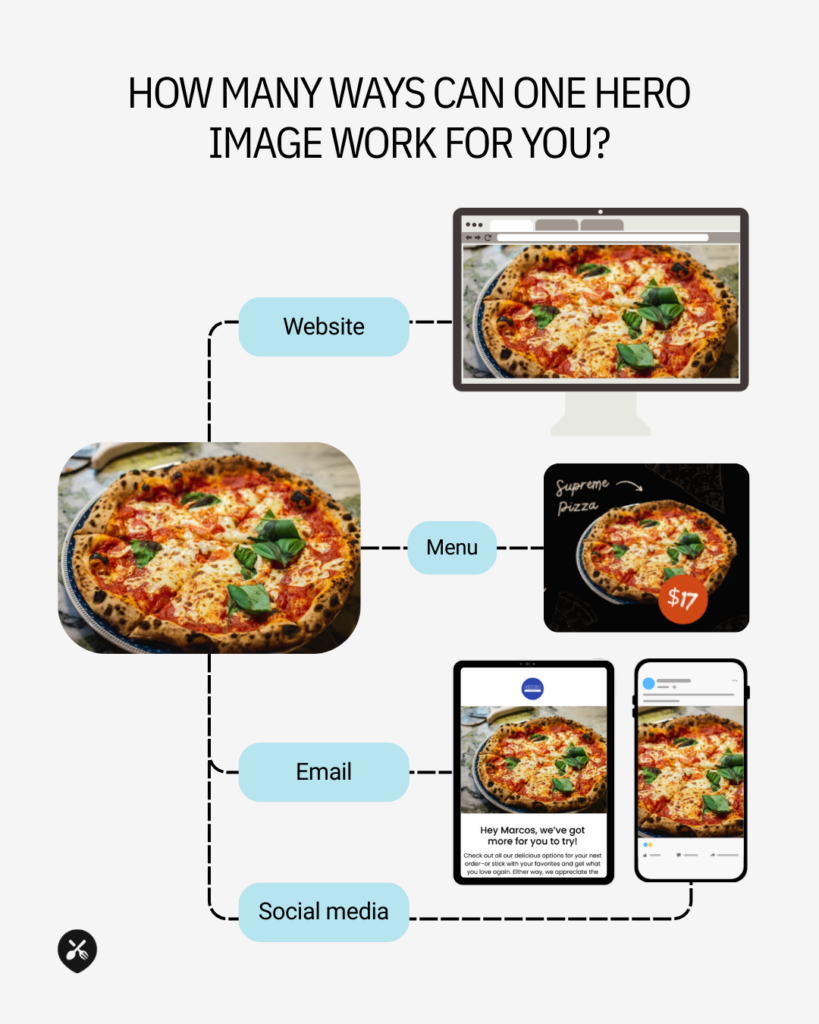
One strong hero image of a dish can do double (or triple) duty. That same photo can:
- Anchor a homepage banner on your website
- Become the centerpiece of a Facebook or Instagram post
- Show up in an email campaign to highlight a special or promotion
During editing, you can crop close-ups for detail shots or adjust framing to keep your grid looking balanced.
Keeping Content Fresh
Not every trend will fit your brand, but keeping an eye on what’s getting traction helps your food photos stay relevant.
Follow popular food photographers, check out recent restaurant shoots, and save posts that inspire you. This kind of ongoing food photography inspiration helps your content evolve while staying true to your identity.
Also, keep your photo library updated and organized by using something like Google Drive so images are easy to find and in one place.
Diners notice when your visuals feel stale, so keep up on adding new images to your food photography resource—even capturing different angles of an often photographed dish can make a difference.
Making Photography Part Of Daily Operations
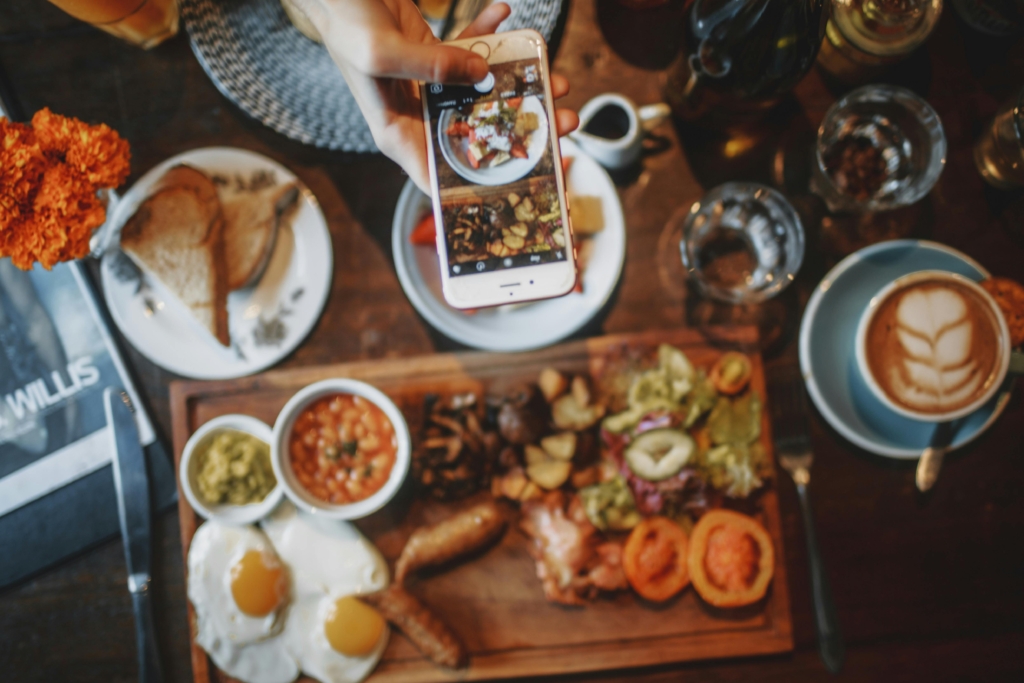
The best photos aren’t always taken during a big professional shoot.
Some of the most engaging content comes from everyday moments in your restaurant—snapping a shot while a dish is plated, catching the team in action, or showing guests the personality behind the food.
Building these habits into daily operations gives you a steady stream of visuals without extra stress.
Capture Behind-the-Scenes Moments
Diners love seeing the process as much as the final product. A quick photo of your cooks at the grill, ingredients being prepped, or a bartender garnishing a drink adds authenticity to your feed. These images don’t have to be polished—they just need to feel real.
A perfect example comes from ChowNow restaurant partner MV Grab and Go, where a chef is captured mid-cook with flames leaping from the pan. The photo radiates energy, skill, and personality while giving diners a glimpse of the passion behind the food. Featuring moments like this not only grabs attention on social media but also reinforces the authenticity and heart that make independent restaurants stand out.
View this post on Instagram
Train Your Staff to Contribute
Your team is on the front lines of service and are the ones most likely to see candid, picture-worthy moments.
Train a few trustworthy staff members to keep their phones with them during their shift to capture special moments while working. Whether it’s a beautifully plated dish in the pass or a funny moment between a guest and a team member, capturing a handful of these images every week can add up.
Just be sure to show them what you’ve learned in this article:
- Use natural lighting when possible
- Keep the focus on the dish or action
- Take more than one photo so you have options
Mix Everyday Shots with Professional Content
Professional food photography has its place—especially for menus, ads, or website updates.
But everyday content keeps your brand alive in between those polished shoots. Mix the two together and you’ll have a visual strategy that’s both high-quality and sustainable.
Turn Great Photos Into More Diners
Great visuals don’t just showcase your menu—they influence how diners perceive your restaurant and whether they decide to order. By making food photography part of your strategy, you’ll turn more of those online browsers into loyal customers.
Contact ChowNow to learn how a branded Restaurant Website and Direct Online Ordering system can showcase your best food photos, attract more diners, and turn online visits into commission-free orders.

Restaurant Food Photography Frequently Asked Questions
What equipment do I need to start with food photography for my restaurant?
You don’t need a lot to get started. A recent smartphone with a good camera, access to natural light, and a clean background will take you a long way. If you want to upgrade later, consider a tripod, a reflector, a simple lighting kit, and a basic DSLR for more control.
How can I make smartphone photos look professional?
Use natural light whenever possible, keep your background clean, and take the time to frame the shot properly. Avoid using your phone’s flash—soft, diffused light will always make your dishes look better. You can also use editing apps like Lightroom Mobile or Snapseed to fine-tune your images.
How often should I take new food photos?
Aim to update your photos whenever your menu changes or you introduce seasonal specials. In between, capture candid or behind-the-scenes moments a few times a week to keep your social feed fresh and engaging.
What are the best times of day for natural light photography?
Late morning or early afternoon typically offers the best soft, diffused light—especially if you’re shooting near a window. Avoid midday when sunlight is harsh and creates deep shadows unless you’re using a diffuser.
Should I hire a professional food photographer or do it myself?
It depends on your budget and goals. If you need high-quality shots for your website or marketing materials, a professional can make a big impact. For social media and day-to-day content, training yourself or your team to shoot consistently can save money and give you more flexibility.
Why does food photography matter for restaurant marketing?
Because people eat with their eyes first. Great photos not only make your food look delicious—they build trust, showcase your brand, and help you stand out online. The better your visuals, the more likely diners are to click, order, and come back.