Restaurant Competitive Analysis: A Practical Guide for Operators

Restaurant competitive analysis is the process of studying other restaurants your customers might choose instead of yours, so you can understand what they do well, where they fall short, and how you can improve your own offering.
Just like a sports team studies its competitors before a big game by analyzing plays and watching game footage, a restaurant needs to evaluate menus, pricing, online reviews, and online presence to understand why diners pick those places and where your restaurant could offer something better or different.
Once you start looking closely at your direct competitors, your indirect competitors, and the places diners see on platforms like Google and Yelp, you get a clearer picture of the competitive landscape around you.
You begin to notice how other restaurants position themselves, which experiences resonate with guests in your area, and what expectations diners bring with them when they walk into your place.
This kind of analysis isn’t about copying anyone else—it’s about understanding the market you’re operating in.
When you know what diners respond to, where your neighborhood’s trends are heading, and which businesses share the same customers, you’re better equipped to make decisions that truly strengthen your restaurant’s success.
Let’s break it down step by step so you can use this insight to stay ahead in a crowded market.
Step One: Identify the Competitors Diners Actually Compare You To

Before you can improve your position in the competitive restaurant industry, you need to know exactly who you’re competing with, and it’s not always who you think.
Many operators focus on the restaurant across the street or the place with a similar concept type, but diners make decisions based on different criteria. They’re comparing you to whatever else fits their craving, budget, and convenience in the moment.
That might mean a nearby fine dining spot, a local quick service brand, or even a popular ice cream shop that’s trending on TikTok.
Your direct competitors aren’t just those serving similar food—they’re the ones targeting the same customers, even if their approach is different.
How Diners Decide Between You and Someone Else
To build an accurate list of both direct and indirect competitors, look at:
- Cuisine: Who else serves the type of food you offer or something close enough?
- Price point: Are they in the same range as your dishes, or slightly above/below?
- Geography: Which restaurants are in your neighborhood or within typical delivery range?
- Service concept: Are they full service, fast casual, or quick service, and do guests see them as a similar experience?
Think about the places someone might choose instead of yours—not just the ones that look like you.

A taco shop might lose customers to a burger joint if both are seen as convenient, affordable takeout options.
A fine dining restaurant might compete with a trendy wine bar if both appeal to the same special-occasion crowd.
Don’t Forget Your Digital Competitors
And don’t stop at your physical block. Many of your most important competitors live online.
Diners discover and compare options using Google Search, Google Maps, Yelp, and delivery apps, often deciding where to eat without ever setting foot inside.
These digital competitors are critical to include in your competitive analysis, especially if you rely on off-premise sales.
This isn’t about obsessing over what other restaurants are doing—it’s about seeing your competition through your customers’ eyes so you can make smarter choices in your own business.
Step Two: Break Down Their Menus and Pricing to Spot Opportunities

Once you’ve identified your competitors, the next step is studying what they offer and how they price it. This is where you uncover gaps, trends, and potential differentiators that can give your restaurant a competitive advantage.
Compare Categories, Standout Items, and Gaps
Start with a basic menu analysis: how is their menu structured? Do they offer more or fewer categories than you? Which menu items are spotlighted or given prime placement?
Pay attention to:
- Signature dishes or bestsellers they promote heavily
- Items that you don’t offer but might resonate with your target market
- Gaps in their menu offerings that your restaurant could fill
If you notice multiple competitors offering a similar special, like street tacos on Tuesdays, that might signal a local expectation or market trend you should be aware of.
Evaluate Pricing, Value Perception, and Specials
Now dig into their pricing structure. Are their entrees higher or lower priced than yours? What are portion sizes like? Are they bundling items or offering family meals?
Pricing isn’t just about numbers—it shapes how guests perceive value.
Ask yourself:
- Are they competing on price or on perceived quality?
- Do their specials make them seem like a better deal?
- Are there ways to offer better value without racing to the bottom?
This kind of competitive menu comparison helps you balance customer satisfaction with profitability.
Use a SWOT Analysis to Turn Observations Into Strategy
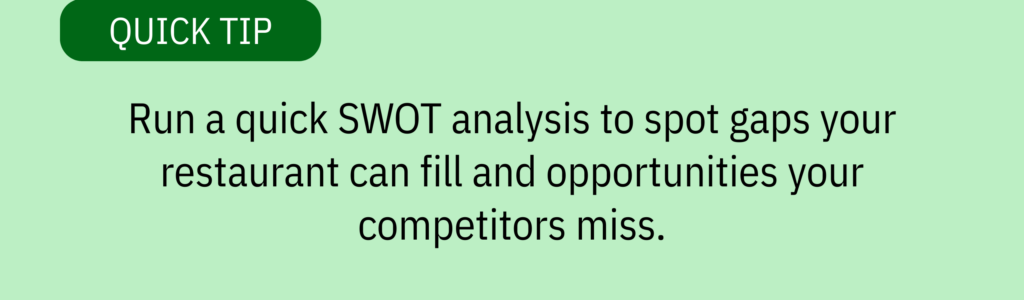
SWOT stands for:
- Strengths
- Weaknesses
- Opportunities
- Threats
It’s a structured way to see what competitors do well, where they don’t, and where your restaurant can gain a competitive advantage.
Using your SWOT analysis, you can identify your restaurant’s strengths and weaknesses, then map them against the opportunities and threats emerging from your competitive landscape.
For example:
- A strength might be your locally sourced ingredients or unique brunch menu
- A weakness could be higher price points compared to nearby direct competitors
- An opportunity might be a market gap in family-friendly takeout options
- A threat could be a new restaurant offering a similar business model with better delivery service
This structured view helps clarify where your restaurant can lean in, adapt, or innovate to gain a real competitive edge.
Step Three: Audit Their Online Presence and What Customers Are Saying

With 90% of customers researching a restaurant online before deciding where to eat, diners are constantly comparing restaurants on Google, Yelp, delivery apps, and Instagram, often making split-second decisions based on visuals, reviews, and vibe.
Understanding how your competitors show up online helps you raise your own game and gives you real insight into what guests care about most.
Start With Their Website, Photos, and Branding
Visit each restaurant’s website and ask: Is it clear, mobile-friendly, and up to date?
Does it reflect a compelling restaurant concept?
How strong is the photography?
Are menu links easy to find?
Strong brand positioning online builds credibility and helps a restaurant stand out in a crowded market. If you notice a competitor investing in pro-level visuals or promoting a consistent brand message, that’s a business practice worth learning from.
Dig Into Reviews to See What Customers Love (and What Needs Work)

Online reviews are a goldmine of unfiltered customer feedback. Read through Google, Yelp, and delivery platform reviews for recurring patterns—not just star ratings.
Look for:
- Common praise: “Amazing wings,” “friendly service,” “great for kids”
- Frequent complaints: “Slow service,” “missing items,” “rude staff”
- Inconsistencies: “Sometimes amazing, sometimes off”
This kind of informal sentiment analysis helps you understand not just what competitors say about themselves, but how customers actually experience them.
It also helps you spot gaps in customer experience that you can capitalize on, or weaknesses you need to avoid repeating.
Watch Their Social Media Like a Guest, Not an Operator
Finally, scroll through their Instagram, Facebook, and TikTok pages and ask yourself: would this content make me want to try this place?
Pay attention to:
- How frequently they post and what kind of content they share
- How they spotlight dishes, deals, or special events
- The tone of voice they use and how they respond to comments
- What kinds of posts generate real engagement
You’ll quickly see the difference between marketing tactics that work and those that fall flat. This is less about copying and more about understanding what resonates in your target market.
Step Four: Study Their Promotions, Delivery Strategy, and Tech Tools

To complete your competitive analysis, take a close look at how your competitors drive revenue and attract repeat customers. Their promotions, delivery execution, and tech tools often reveal what’s working behind the scenes, and where you can level up.
Break Down Their Promotions and Loyalty Tactics
Start by looking at how they’re encouraging repeat visits and bigger orders.
Are they running limited-time offers (LTOs)?
Promoting seasonal specials? Bundling items for families or groups?
These tactics often reflect how well a restaurant understands what motivates their customers.
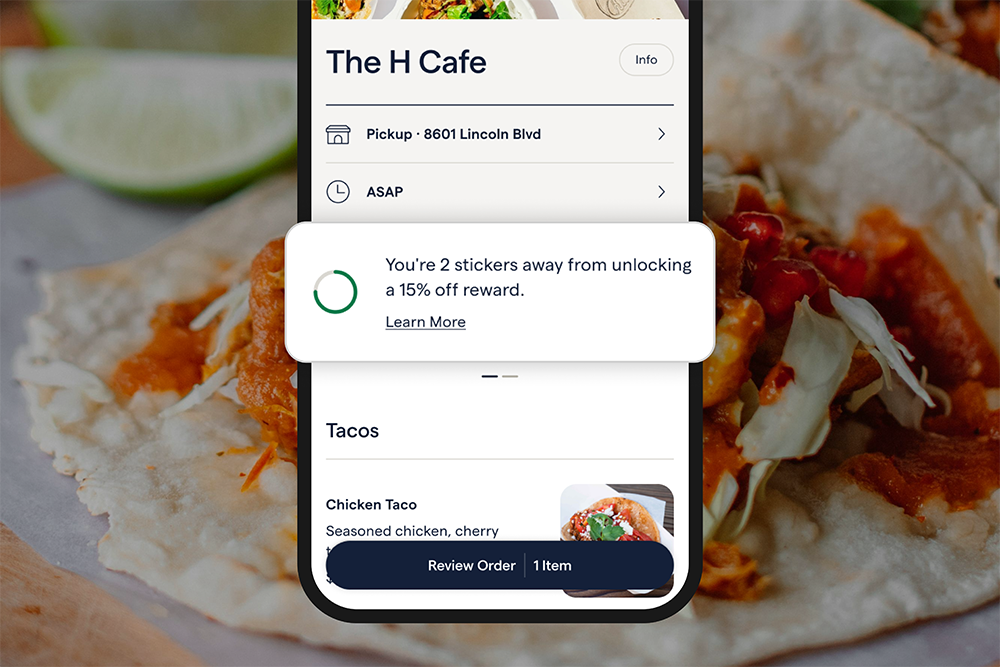
Also, check for a loyalty or rewards program that incentivizes customers to return frequently. Studying it will give you insight into how they build repeat visits.
Pay attention to the channels they use to promote these offers. Are they leveraging email, social media, or just in-store signage? These choices often reflect how well their strategy is aligned with guest behavior.
Evaluate Their Delivery and Pickup Experience
Open or download a few delivery apps and search for your competitors. Look for which platforms they’re using, how they’re pricing items compared to their in-house menu, and see if they have a minimum order threshold, delivery fee, or estimated wait time.
If you really want to dig deeper into the online ordering experience, try placing orders with one or two of your closest competitors.
Pay attention to:
- Packaging quality and branding
- Accuracy of the order
- Delivery time and driver professionalism
- Curbside or pickup process if available
These little details make a big difference in customer satisfaction, and they’re often the source of repeat business or bad reviews.
Identify Their Tech Stack and Ordering Tools
Finally, take note of the tools and systems they’ve integrated into their operations.
Are they using a modern online ordering system, or something clunky and outdated?
Do they allow guests to order directly from their website, or only through third-party apps?
Do they send automated follow-up messages shortly after receiving your order?
Even small differences in tech can lead to big gains through convenience. If a competitor makes ordering incredibly easy, whether through a streamlined site, smooth checkout, or consistent communication, it can significantly influence where customers choose to spend their money.
Turn Competitive Insights Into Strategic Action
You’ve gathered the insights—now it’s time to apply them to your menu, marketing, and operations. A strong competitive analysis isn’t just market research—it’s a roadmap to making smarter, more confident decisions for your restaurant.
Contact ChowNow to discover how a Direct Online Ordering system can turn your competitive analysis insights into higher sales, without third-party fees cutting into your profits.
Restaurant Competitive Analysis Frequently Asked Questions
What is a competitive analysis for restaurants?
A competitive analysis for restaurants is a structured process where you study other restaurants your guests might choose instead of yours. It helps you understand their strengths, weaknesses, pricing, menu strategy, online presence, and customer feedback so you can make clearer decisions about how to position your own restaurant.
How often should restaurants run a competitive analysis?
Restaurants should run a competitive analysis at least twice a year, or anytime the market shifts significantly—such as when a new competitor opens, delivery trends change, or your sales performance drops. Regular analysis helps you stay responsive to customer expectations and ahead of emerging trends.
How do I do a competitive analysis for my restaurant?
Start by identifying the restaurants diners compare you to, both directly and indirectly. From there, review their menus, pricing, online reviews, social media presence, promotions, delivery performance, and technology. Organize your findings so you can spot patterns, opportunities, and areas where you can differentiate and improve.
What should be included in a restaurant competitive analysis?
A complete restaurant competitive analysis should include competitor identification, menu comparison, pricing strategy review, digital and social media presence, customer feedback trends, promotional tactics, delivery execution, and observable tech tools. These insights help you make smarter decisions in both operations and marketing.
How many competitors should I analyze?
Most restaurants should analyze 5 to 10 competitors: a mix of direct competitors (those offering similar cuisine or targeting the same customers) and indirect competitors (those offering alternative dining options in the same market). This gives you a well-rounded view of your competitive landscape without becoming overwhelmed by too much information.
Use Takeout to Drive Customer Loyalty
Takeout isn’t just a convenience—it’s a powerful tool for building lasting relationships with your diners. But keeping diners engaged and coming back can be a challenge. In this guide, you’ll learn how to optimize your takeout strategy to encourage repeat business, increase direct orders, and strengthen customer loyalty.