How Food Delivery Aggregators Help Restaurants Streamline Operations
Is your delivery operation disorganized? Do orders get lost in the shuffle between different platforms? Is your staff struggling to juggle multiple tablets, leading to slower service and mistakes?
If that sounds familiar, it may be time to use a food delivery aggregator—a simple way to bring all your third-party orders into one place so your team isn’t constantly bouncing between screens.
You’re not alone, either. With 52% of consumers saying ordering out is essential to their lifestyle, every restaurant that wants to stay competitive must offer delivery. But with so many third-party platforms available, managing them all simultaneously quickly becomes overwhelming.
Instead of streamlining services, your delivery station creates chaos—multiple tablets cluttering the counter, staff constantly switching between screens, and a never-ending struggle to keep up with incoming orders.
The result is frustrated customers, stressed employees, and a system that feels more like a burden than a boost to your business.
- A food delivery aggregator consolidates orders from apps like Uber Eats, DoorDash, and Grubhub into one workflow, reducing tablet chaos and missed tickets.
- POS and kitchen integrations help cut manual entry, improve order accuracy, and speed up prep during peak hours.
- Centralized order management improves the guest experience with faster turnaround times, fewer mistakes, and more consistent delivery quality.
- With better operational flow and reporting, restaurants can handle higher delivery volume and retain more revenue without adding staff.
What are Food Delivery Aggregators?
Food delivery aggregators are software tools that streamline the online ordering process by consolidating multiple third-party delivery services into a single system.
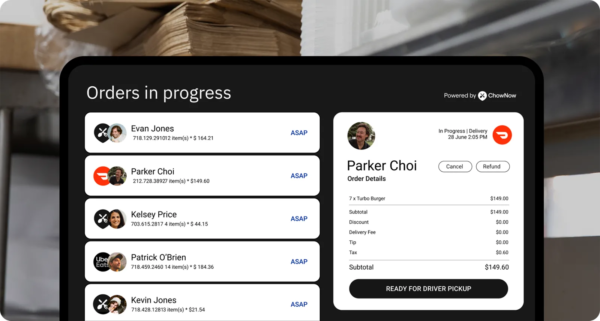
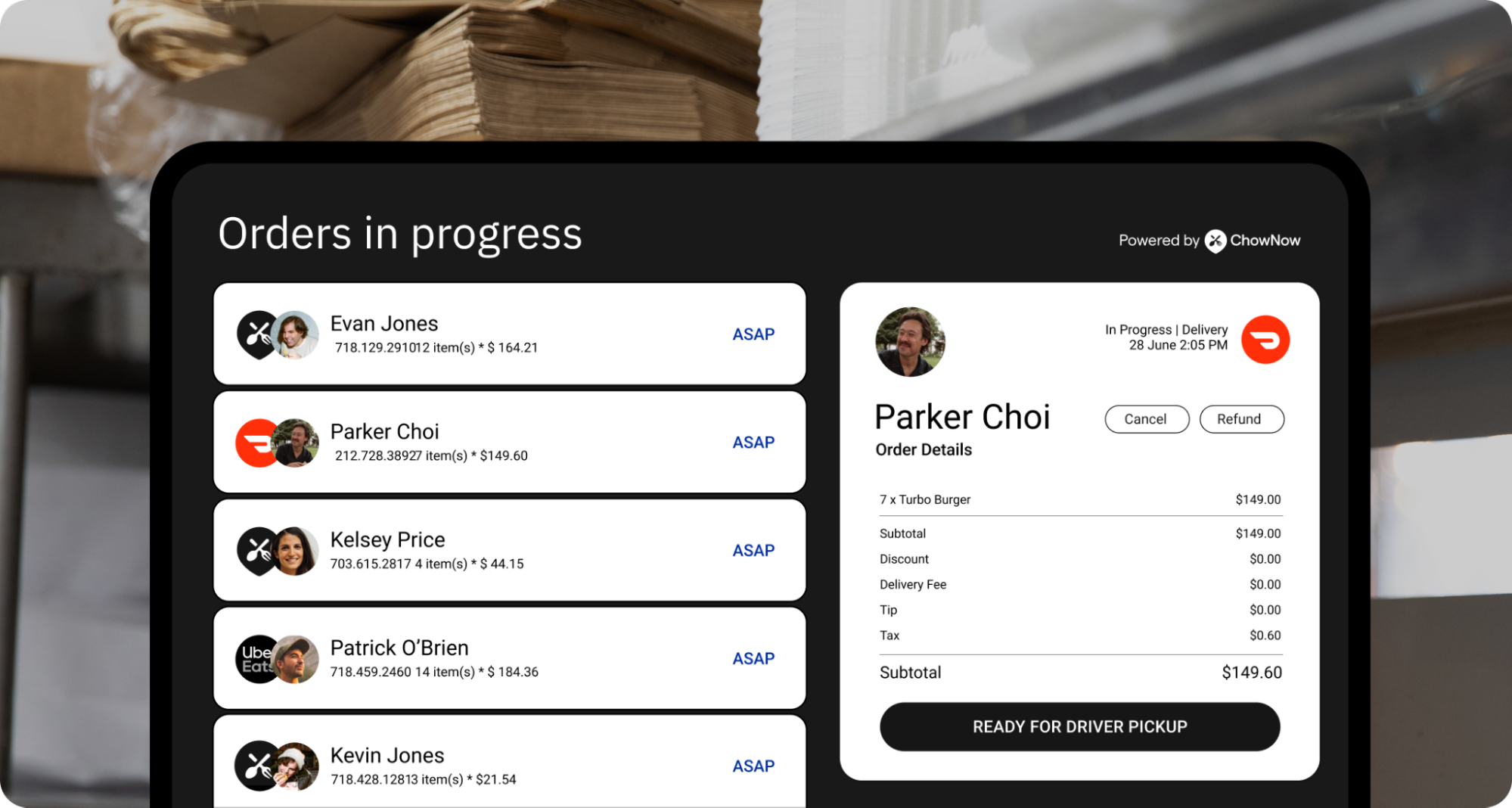
Instead of juggling separate tablets for Uber Eats, DoorDash, Grubhub, and other services, restaurants can manage all incoming orders from one centralized dashboard.
Here’s how it works:
When a customer places an order through a third-party delivery app, the order is automatically sent to a single tablet with all of your delivery app orders. These orders can be directly sent to your POS or kitchen printer, depending on your setup.
This eliminates the need for staff to manually input orders, reducing mistakes, speeding up service, and ensuring smoother kitchen operations.
By acting as a bridge between restaurants and multiple delivery services, aggregators help streamline order management, improve order accuracy, and allow restaurants to focus on delivering a great dining experience—without the headaches of handling multiple platforms separately.
How Can Aggregators Help Your Delivery Operations?
Managing multiple delivery platforms without an aggregator is a logistical nightmare, and the task often falls on the expo or to-go station staff.
From our experience working with restaurants that run multiple delivery apps, the biggest hidden cost isn’t just “tablet clutter,” it’s the constant context switching. Orders are more likely to be accepted late, missed entirely, or re-entered incorrectly (especially when modifiers and special instructions come in fast). A food delivery aggregator reduces that load by creating one consistent workflow for accepting and routing orders, which makes training easier, shifts smoother, and peak periods far less chaotic.
The employee must constantly monitor multiple tablets, keeping an eye—and an ear—on incoming orders.
Every second counts in delivery, as customers can grow impatient within just 29 minutes of placing their order.
If an order isn’t accepted immediately, it sits there, time ticking away until someone finally notices and sends it to the kitchen.
During a busy shift, when the focus tends to be on in-house diners, delivery orders can pile up unnoticed, creating a domino effect—delays lead to frustrated customers, overwhelmed staff, and a chaotic kitchen struggling to keep up.
Food delivery aggregators solve this problem by consolidating all orders into a single dashboard, eliminating the need to manage multiple tablets.
Instead of staff bouncing between screens and manually transferring orders into the POS, everything is streamlined, reducing confusion and improving order accuracy.
Benefits of using an aggregator for your delivery operations:
- Increased Efficiency: Orders flow directly from multiple platforms into one system, minimizing manual work and allowing staff to focus on food prep and service.
- Fewer Order Errors: With automated order processing, the risk of incorrect or missed orders drops significantly, leading to fewer refunds and better customer satisfaction.
- Improved Kitchen Workflow: A centralized system ensures orders are organized, helping the kitchen prioritize and prepare meals more effectively, even during peak hours.
By simplifying the delivery process, food delivery aggregators take the pressure off staff, reduce manual errors, and smooth out operations for everyone.
How Can Food Delivery Aggregators Enhance the Customer Experience?
A smooth delivery operation doesn’t just make life easier for restaurant staff—it directly impacts the customer experience.
When food arrives quickly, correctly, and in good condition, customers are far more likely to be satisfied with the experience and order again.
Food delivery aggregators are key in making this happen.
Instead of waiting for someone to manually accept and enter each order, tickets are processed immediately, ensuring the kitchen can start prepping right away.
Faster turnaround times mean food gets out the door sooner, reducing late deliveries and keeping customers happy.
Order accuracy also improves.
Since aggregators automatically sync incoming orders with your POS system or kitchen printer, there’s less room for human error—no more mistyped modifications or forgotten special requests.
Customers receive exactly what they ordered, eliminating frustration and negative reviews caused by incorrect meals.
How aggregators enhance the customer experience:
- Faster Delivery Times: Orders don’t sit unattended on multiple tablets, reducing lag time and ensuring customers receive their food while it’s still hot and fresh.
- Improved Order Accuracy: With direct POS integration, staff no longer have to manually input delivery orders, there’s less chance of mistakes, ensuring customers get exactly what they ordered.
- Better Service Overall: With a more streamlined operation, front-of-house and kitchen teams can focus on quality rather than scrambling to manage multiple systems.
When operations run without incident behind the scenes, it translates into a better experience for customers—faster deliveries and fewer mistakes ensure customers will order again in the future.
If you’re ready to stop juggling multiple delivery tablets, ChowNow’s Order Aggregation can bring your third-party orders into one streamlined workflow—helping reduce missed tickets, improve order accuracy, and keep service moving during busy shifts.
How Food Delivery Aggregators Can Increase Your Profit Potential
Restaurants that integrate a food delivery aggregator also see a significant boost in their bottom line.
By simplifying food delivery operations, restaurants can tap into a larger customer base because they can easily handle a larger volume of online orders.
With fewer steps and operation problems, operators can focus on getting food out the door quickly and accurately, increasing overall sales without overwhelming their team.
This means fewer missed opportunities, faster turnaround times, and happier customers who are more likely to order again.
When operations are smooth, restaurants can take full advantage of the demand for delivery without sacrificing service quality.
How aggregators increase restaurant profits:
- Higher Order Volume Without Added Staff: By streamlining operations, restaurants can efficiently handle more delivery orders without hiring additional staff or overloading the kitchen.
- Fewer Order Mistakes, More Revenue Retained: Direct integration reduces human error, meaning fewer refunds, remakes, and lost revenue from incorrect orders.
- Optimized Staffing for Peak and Slow Hours: With better order flow, restaurants can adjust labor needs more accurately, reducing unnecessary labor costs while maintaining service quality.
With a more efficient, cost-effective approach to delivery, restaurants can increase their delivery volume and reach more new customers while keeping expenses under control.
The Future of Food Delivery
In the last several years, delivery has changed dramatically, going from a secondary revenue generator to a core offering for any restaurant wanting to stay competitive.
It’s a trend that’s growing 9.49% annually, and restaurants that stay ahead of the curve will be better positioned for long-term success.
With customer expectations higher than ever, tech will play a bigger role in how restaurants manage delivery, communicate with their customers, and keep up with demand.
Food delivery aggregators are adapting with emerging trends, integrating more advanced tools to make delivery smoother and more profitable.
AI-powered order management and automation are becoming standard, helping restaurants anticipate busy times and prevent bottlenecks before they happen.
Many aggregators are also offering centralized reporting, giving restaurants better insight into sales trends, platform performance, and operational improvements—all in one place.
Many restaurants are also looking for ways to reduce their reliance on third-party apps and build stronger relationships with customers through direct online ordering and loyalty programs.
These strategies help turn one-time customers into repeat regulars while lowering the commission fees associated with marketplace platforms.
The future of delivery is bright and so long as restaurant operators stay proactive and up-to-date with emerging technologies, they’ll see success far into the future.
Why Every Restaurant Should Use a Food Delivery Aggregator
If your restaurant is on multiple delivery apps, a food delivery aggregator isn’t a “nice to have,” it’s the simplest way to protect speed, accuracy, and sanity during busy shifts. By consolidating all marketplace orders into one workflow (and routing them to your POS or kitchen printer), you reduce missed tickets, cut manual entry errors, and keep your team focused on execution instead of screen-switching. The result is smoother kitchen flow, faster delivery times, better guest experiences, and a delivery operation that can scale without adding chaos.
Contact ChowNow to learn how Order Aggregation tools can simplify and streamline your delivery operations by a significant margin, helping your restaurant reach new customers and grow.
Food Delivery Aggregator Frequently Asked Questions
What is a food delivery aggregator?
A food delivery aggregator is software that consolidates orders from multiple third-party delivery apps (like DoorDash, Uber Eats, and Grubhub) into a single dashboard or workflow, often with POS or kitchen printing options.
Will an aggregator reduce order mistakes and refunds?
By minimizing manual re-entry and creating a single, consistent workflow for accepting and routing orders, a food delivery aggregator helps reduce missed tickets, incorrect modifiers, and other common errors that lead to refunds or remakes.
Is a food delivery aggregator worth it for a small restaurant?
If you’re managing orders from more than one delivery app, or experiencing missed tickets, slow acceptance times, or staff overwhelm, an aggregator can quickly pay off by simplifying the workflow and improving accuracy.
What should I look for when choosing a food delivery aggregator?
Look for the delivery platforms you need, POS/kitchen integrations, reliability, ease of training, clear reporting, and support.